

Before and after
See additional cases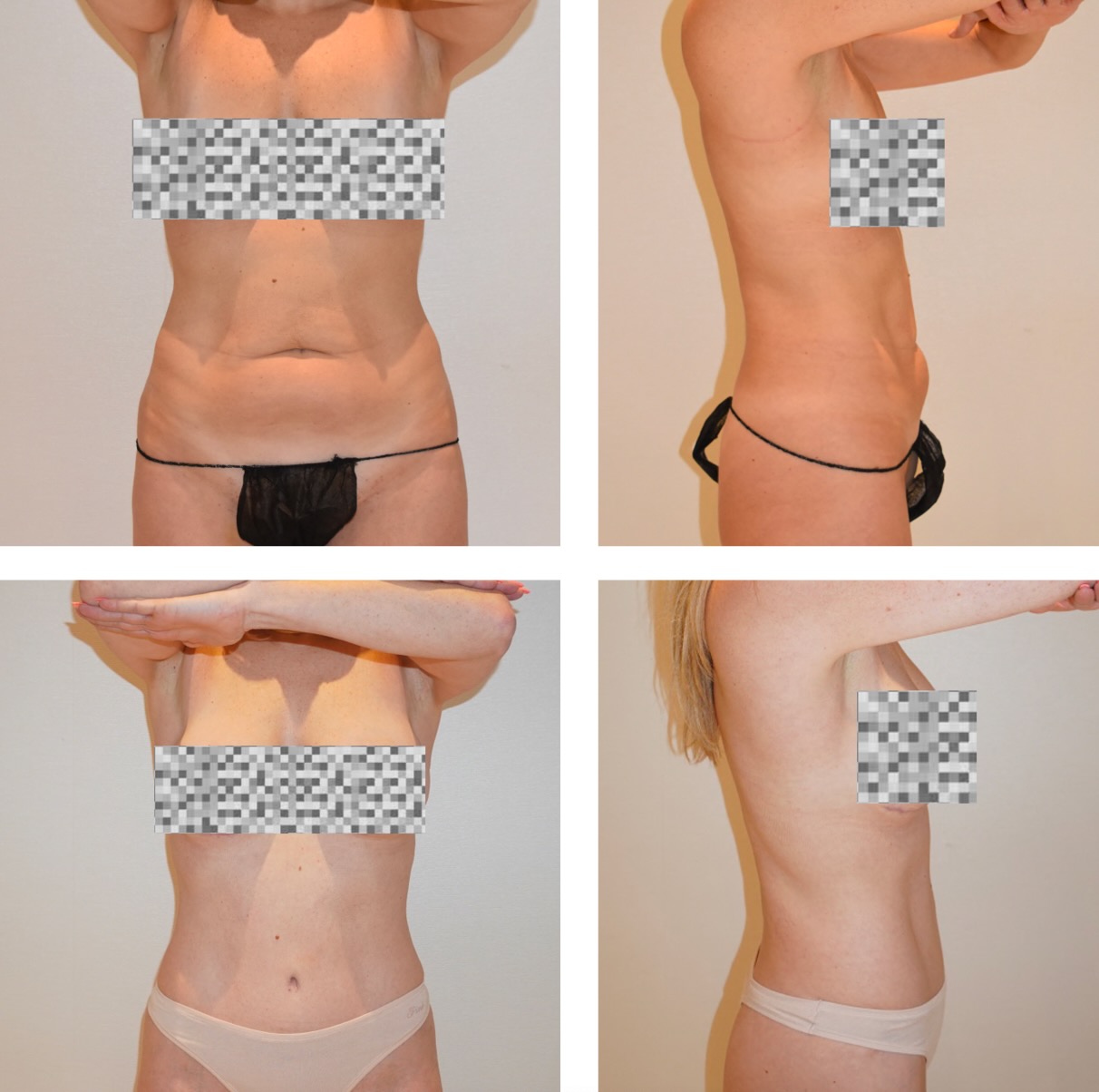
Tummy Tuck
Case 1
Individual results may vary.
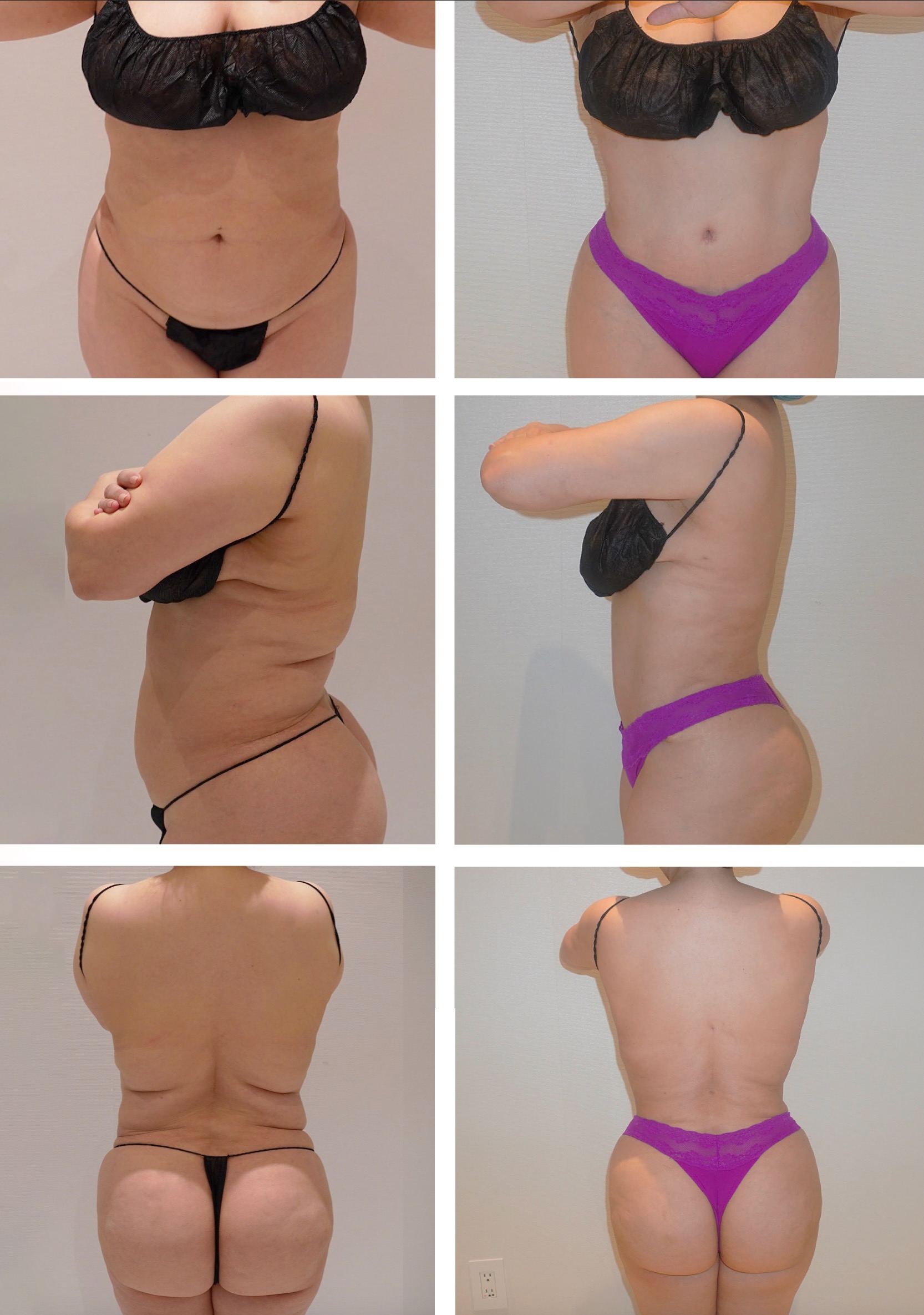
Tummy Tuck
Case 2
Individual results may vary.
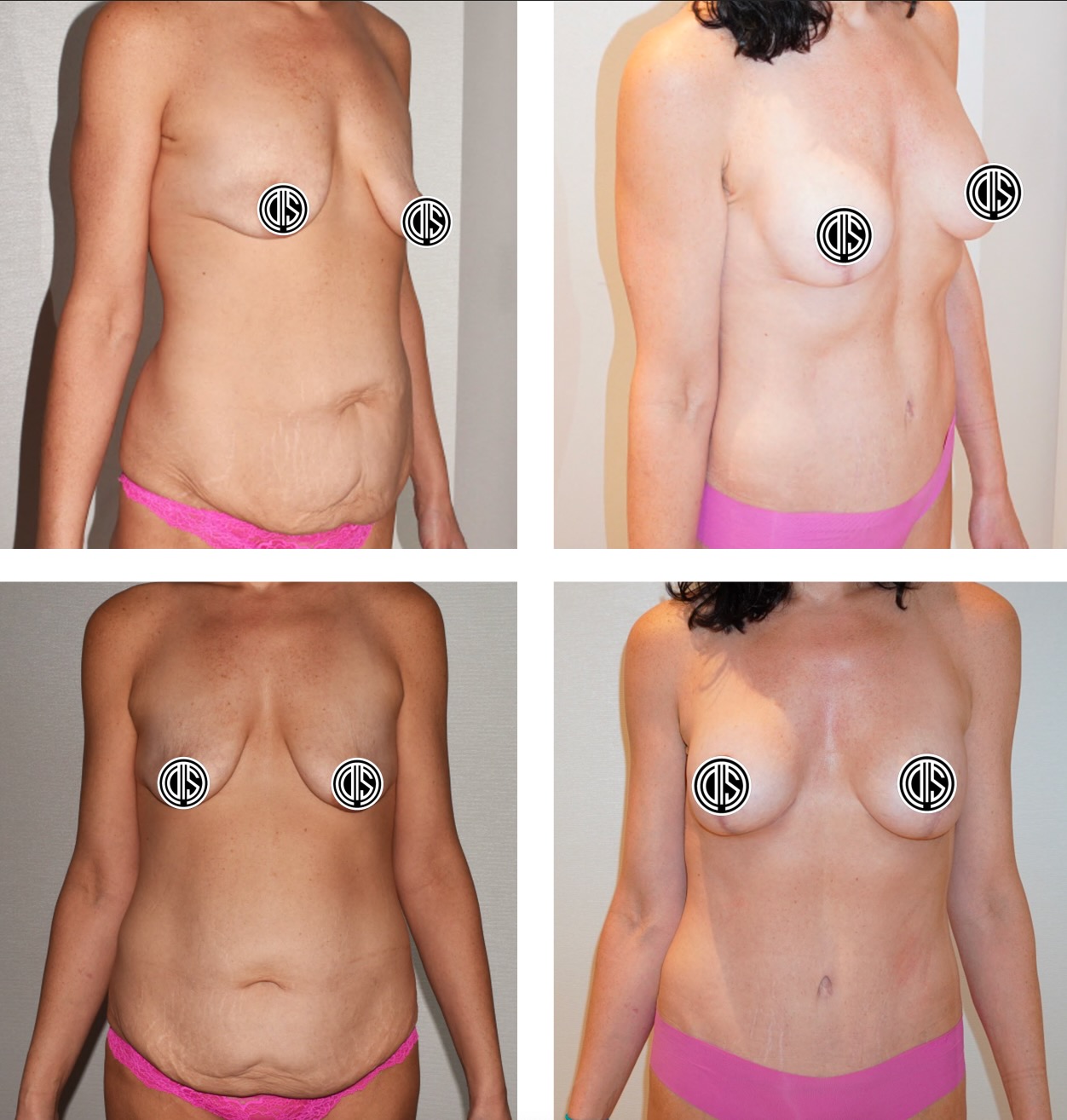
Tummy Tuck
Case 3
Individual results may vary.
Individual results may vary.
What a tummy tuck does.
A tummy tuck, or abdominoplasty, addresses loose abdominal skin and, when needed, separated abdominal muscles. Liposuction may be included to refine areas of excess fat. The plan depends on which layers are contributing to your abdominal contour.
Dr. Smith evaluates your skin, the fat beneath it and the abdominal wall together. At your consultation, he will explain whether a tummy tuck, liposuction or another approach fits your anatomy and goals, and what each option can realistically address.
PATIENT EXPERIENCE
A patient’s perspective.
Hear one patient’s tummy tuck experience with Dr. Smith.
Your consultation is a chance to discuss your goals and the approach that fits your anatomy.
Plan your consultationLiposuction or a tummy tuck?
What is causing the bulge decides the operation. Dr. Smith answers the question anatomically rather than by procedure: the layer producing the shape a patient dislikes decides the operation.
When fat is the whole problem
Liposuction alone is enough when excess fat is the only issue. In a patient with strong abdominal muscles and good skin elasticity, removing fat reduces volume and the skin shrink wraps to the new, flatter shape. This is the most common scenario in the practice. See stomach liposuction.
When the abdominal wall or the skin is the problem
Liposuction alone fails when the abdominal wall is lax or the rectus muscles have separated, because the bulge comes from a layer it does not touch. When skin elasticity is poor, it can make the abdomen look worse: volume goes down, the skin does not shrink back to a good shape, and the result is waviness and rippling. That applies most often after pregnancy and in patients more advanced in age.
Loose skin is not an automatic disqualification. Some patients with loose skin remain good liposuction candidates because what they want is a smaller waistline and a better silhouette in clothes, not smoother skin. That is a reasonable choice, provided the patient knows exactly which result they are buying.
Superficial fat and visceral fat
Superficial fat, which lies above the abdominal wall, is what liposuction removes. Visceral fat lies below the abdominal wall, around the organs, and liposuction does not go there. Dr. Smith states the limit without hedging: there is no surgical way to address visceral fat, so it is handled with diet and exercise.
The choice is also less binary than it once was. Truly severe skin laxity or a significant rectus diastasis still calls for abdominoplasty. Milder problems in the skin and muscle layers can be treated without excising skin, covered below.
PUBLISHED SURGICAL EXPERTISE
A Tummy Tuck Surgeon Who Wrote on
Avoiding Complications.
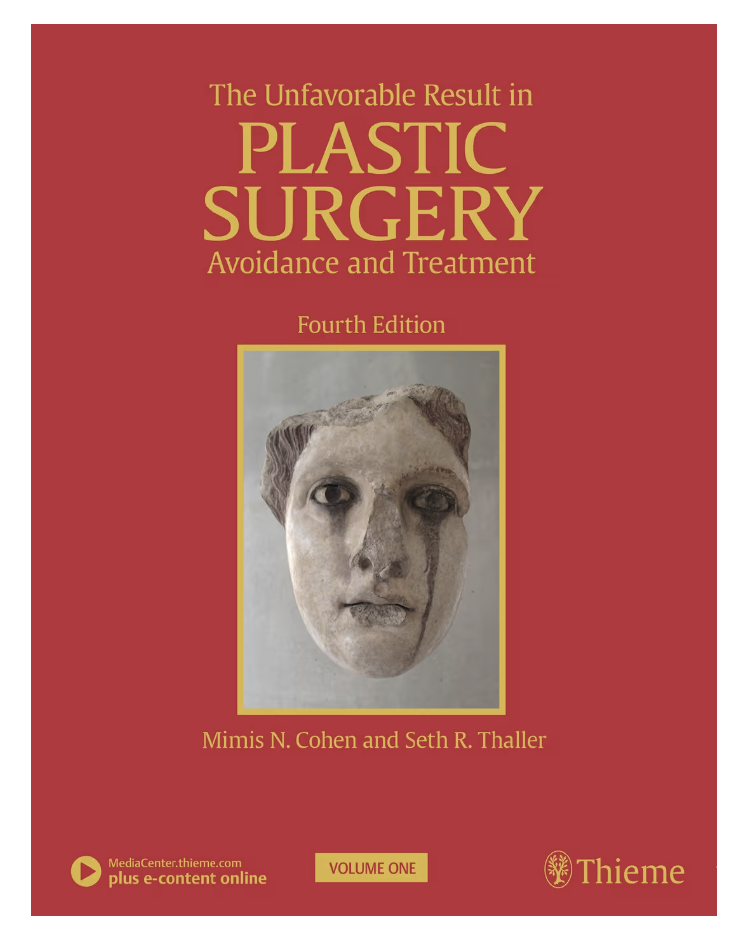
Abdominoplasty (Discussion)
Dr. Darren Smith, a board-certified plastic surgeon in New York City, co-authored a textbook discussion with Dr. Alan Matarasso on preventing and managing complications after abdominoplasty, or tummy tuck. It appears in The Unfavorable Result in Plastic Surgery: Avoidance and Treatment (4th ed., Thieme, 2018), a reference for plastic surgeons on avoiding problems and treating them when they occur.
For a patient considering a tummy tuck, this matters because outcomes depend on more than technique. They also depend on choosing the right candidate, planning carefully, and recognizing issues such as seromas, wound-healing problems, poor scar position, or contour irregularities. Dr. Smith’s published work in this area informs how he evaluates, plans, and follows each abdominoplasty patient.
Citation: Matarasso A, Smith DM. Abdominoplasty (Discussion). In: Cohen MN, Thaller SR, eds. The Unfavorable Result in Plastic Surgery: Avoidance and Treatment. 4th ed. Thieme; 2018.
View the textbook chapterRectus diastasis.
A rectus diastasis is a separation of the two paired rectus abdominis muscles that run vertically up the abdomen. Only a weak layer of connective tissue is left between them, separating the superficial fat above from the organs and visceral fat below.
It is not a hernia. In a diastasis the abdominal wall stays intact, although weakened, and the muscles have simply moved apart. In a hernia there is an actual hole in the abdominal wall that lets deeper contents bulge through.
The most frequent cause in the practice is pregnancy: the growing uterus needs more room than the rectus muscles allow, and they often do not come back together afterward. It can worsen with further pregnancies or heavy lifting and does not resolve on its own. It causes a weak core and a bulge that makes a flat abdomen very difficult to achieve.
What helps, and what actually repairs it
Physical therapy improves core strength without changing the anatomy. Emsculpt can build the rectus muscles and narrow the separation by a modest amount, enough to matter in a carefully selected mild case and not enough to rely on in a severe one.
Plication is the definitive repair. During an abdominoplasty the medial borders of the rectus muscles are identified and sewn together in the midline, reconstructing the abdominal core. Surgery is the only definitive way to manage a diastasis. Whether a given one is mild or severe is settled by examination at consultation.
The operation.
A full abdominoplasty is performed under general anesthesia, which is the only anesthesia used for this operation, in Dr. Smith's accredited outpatient surgical facility inside his Manhattan office. The facility is accredited by QUAD A and he works only with board-certified anesthesiologists. An extended abdominoplasty is also performed under general anesthesia only. A mini abdominoplasty is the one exception: it can be performed under general anesthesia or IV sedation, and under local anesthesia in very limited cases, and which applies is decided at consultation.
A full tummy tuck uses a low incision across the lower abdomen and an incision around the belly button. The incision pattern is planned around the amount and location of excess skin. Scars are permanent and usually fade with time; Dr. Smith discusses their expected position and appearance with you before surgery.
The rectus muscles are then sewn back together in the midline. That step, plication, is what treats the diastasis. It is almost always performed in patients who have had children, because that is where the separation is found. It is sometimes not required in male patients or in patients after massive weight loss, whose problem is skin rather than muscle separation. The decision is made case by case on the examination findings.
Liposuction is often performed at the same time, so that fatty excess, skin excess and abdominal wall laxity are addressed in one sitting.
Whether drains are used is decided case by case rather than by a standing rule. When they are placed they exit the low horizontal incision, and their purpose is to remove fluid the body produces afterward, which could otherwise collect, become infected or form a seroma, a fluid collection that can distort the contour. When drains are used they come out once the fluid they are draining has fallen off, which is assessed at the post-operative visits.
An abdominoplasty takes two and a half to three and a half hours, depending on the size and complexity of the case. The estimate for a specific plan is given at consultation.
Full, mini and extended abdominoplasty
Watch Dr. Smith explain what mini and full tummy tucks can address
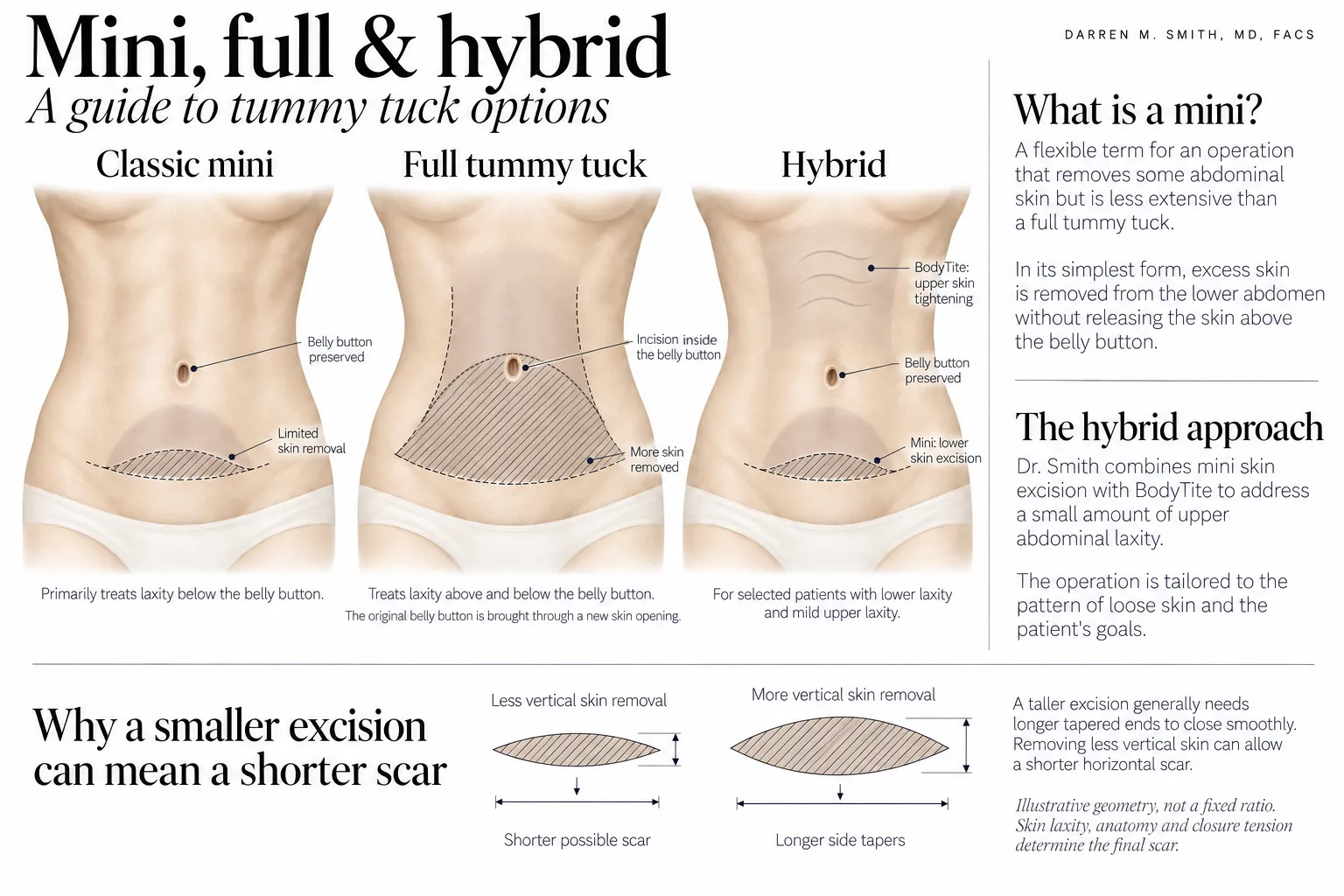
Three extents are offered, and where the loose skin actually sits decides which one is used. A full abdominoplasty treats the skin above and below the belly button and allows plication along the full length of the muscle separation, which is what most patients with post-pregnancy laxity and a diastasis need. A mini abdominoplasty treats skin below the belly button only, through a shorter incision, and suits a patient whose laxity is confined to that zone. An extended abdominoplasty carries the incision further around toward the flanks to take in skin at the sides as well, which is what patients whose laxity wraps around the waist require, a pattern common after major weight loss. The choice follows from the examination and is made at consultation, not from a preference for the smallest possible operation.
For planning after medication-assisted weight loss, explore plastic surgery after Ozempic and other GLP-1 medications.
Concerned about a fold above a previous C-section scar? Read about understanding a C-section shelf and discuss which options fit your anatomy.
Anesthesia follows the extent of the operation. A full abdominoplasty and an extended abdominoplasty are performed under general anesthesia only. A mini abdominoplasty can be performed under general anesthesia or IV sedation, and under local anesthesia in very limited cases. Which applies is decided at consultation.
Who is a candidate.
Good candidates are in generally good health, a requirement for any elective aesthetic procedure, and have a problem liposuction cannot solve: significant loose skin, a rectus diastasis, or both. The operation is most popular among women who have finished having children, and further pregnancies can worsen a diastasis, but Dr. Smith calls that a pattern, not a rule. Men have it as well, and it is frequently combined with breast surgery as part of a mommy makeover.
What the practice requires before surgery
- No nicotine in any form for four weeks before surgery and four weeks after it. That includes cigarettes, vaping, pouches, patches and gum. The practice tests for nicotine. Nicotine constricts the blood supply to the skin that an abdominoplasty depends on to heal.
- Any medication or supplement that can act as a blood thinner stops 10 days before surgery. The list is reviewed at consultation, because it includes common supplements as well as prescriptions.
- Medical clearance and laboratory work, since a full abdominoplasty is always performed under general anesthesia. Patients over 40 also have an EKG.
- Weight stable for three months before the operation, so that the skin being excised is not still changing.
When a tummy tuck is the wrong operation
- Anyone unwilling to accept a permanent hip to hip scar and a scar around the belly button.
- Patients whose only issue is excess fat, with good skin and a sound abdominal wall. Liposuction is the better operation.
- Patients looking for weight loss. These are shape change procedures.
- Patients for whom the recovery is not compatible with their life right now. Dr. Smith routes them to the non-surgical options below.
Questions to settle at your consultation
- Which concerns involve skin, fat or the abdominal wall?
- Which approach would address those concerns, and what would it leave unchanged?
- Where would the scars be, and how might they change over time?
- How could future pregnancy or weight changes affect the plan?
- What help, time away and follow-up should I arrange?
Ask Dr. Smith to explain the trade-offs for your own anatomy before choosing an operation.
Recovery after a tummy tuck.
Most patients with desk jobs plan to return at about two weeks. Light cardio or aerobic exercise begins at two weeks; light leg, upper-body and core exercises begin at four weeks. Full exercise, including heavy lifting and running, resumes gradually from six weeks with Dr. Smith’s clearance. These are the practice’s planning milestones; your written instructions account for the operation performed and how you are healing.
Planning around childcare, commuting or travel? Use the Recovery Planner to organize your questions, then confirm your arrangements with the practice. Visitors can also review the guide for out-of-town patients.
Pain control
Pain control starts the day before surgery rather than after it. Journavx, a non-opioid pain medication, is begun the day before the operation and continued through the first several days of recovery, so that control is already established by the time a patient wakes up instead of being chased afterward. Exparel, a long acting local anesthetic, is placed in the abdominal wall during surgery and can leave the abdomen close to numb for roughly 48 to 72 hours. The purpose of running both is to keep patients comfortable on as little opioid medication as possible.
The first days
Patients wake up feeling tight rather than in pain, because a large amount of long acting numbing medication is placed during surgery.
An abdominal binder or garment is worn continuously for one month after an abdominoplasty. When it comes off to shower and how it is washed are covered in the written instructions.
Patients are up and walking right away: early walking lowers the risk of a clot forming in the legs and traveling to the lungs. For the first week patients walk bent at the waist, deliberately, so that no tension is placed on the abdominal repair, and do little beyond walking and rest. Soreness peaks around three days, when swelling is highest and pain medication wears off; by week two most patients straighten up.
The first night, and out of town patients
Every tummy tuck patient spends the first night with a nurse, and the practice would rather that night be spent in its own private surgical suite at the Ritz Tower than at home or in a hotel. The suite is part of the office, so a patient who stays there is recovering where the operation was performed and where the team is. The nurse acts as Dr. Smith's eyes and ears and is in contact with him through the night. The overnight nurse is required rather than optional, the practice coordinates it, and it is billed to the patient.
Manhattan residents have gone home the same evening with the nurse. Patients from outside Manhattan are asked to spend at least one night in the city, and out of town patients to stay in the New York area for seven to ten days, case by case.
Follow-up visits, and who provides post-operative care
Patients are seen the next morning, then at one week, two weeks, one month, three months, six months and one year. That schedule is the minimum, and patients may come in as often as they want on top of it.
Dr. Smith leads all post-operative care himself. He and the practice's physician assistant see post-operative patients together, and he is present for every major visit; some minor visits may be with the physician assistant alone. The arrangement gives patients both things that matter after an abdominoplasty: continuity from the surgeon who performed the operation, and enough capacity in the schedule that a patient who wants to be seen is seen, rather than being rationed to a fixed number of appointments.
The final result takes six months to a year, as swelling resolves and the connective tissue contracts to the new shape, but the change is dramatic right away.
Alternatives to a full tummy tuck.
Alternatives depend on whether your main concern is excess fat, loose skin or the abdominal wall. Liposuction is a surgical procedure; it should not be described as a non-surgical alternative. A mini tummy tuck may be an option for selected lower-abdominal concerns.
BodyTite is bipolar radiofrequency skin tightening delivered through the same three to four millimeter incisions used for liposuction. One pole travels on a thin wand beneath the skin and the other follows on the surface; the energy between them creates a controlled thermal injury that tightens as it heals. Emsculpt contracts the rectus muscles electromagnetically, building muscle mass and narrowing a diastasis by a modest but real amount.
These treatments do not reproduce the results of an abdominoplasty. Dr. Smith will explain what each option can address, its limitations and its recovery requirements in relation to your anatomy and goals.
What drives the cost of a tummy tuck.
There is no single price for an abdominoplasty; the operation is scaled to the anatomy. What moves it:
- How extensive the skin excision and the muscle repair need to be.
- Whether liposuction is combined, and over how many areas.
- Whether other procedures are performed at the same sitting. Combining is usually more economical than staging, because the team is mobilized and set up once.
- Anesthesia time and the facility fee for the accredited operating room.
- The required overnight nurse, which the practice coordinates and bills to the patient, and out of town lodging.
The quote, the deposit and the revision policy
Every quote is itemized into a surgeon's fee, a facility fee and an anesthesia fee, so that each component is visible rather than bundled into one number. All post-operative visits are included in the quote. Other items, including the overnight nurse, are not. A quote is valid for 30 days, and a 10 percent deposit is taken at booking.
For one year after surgery there is no surgeon's fee on a revision. The patient remains responsible for the anesthesia and facility fees if a revision is performed.
Consultations are $500, applied toward any procedure booked, and the fee is not waived. Financing is available through CareCredit and Alphaeon Credit. Dr. Smith is out of network with all insurance plans; the practice helps patients use out-of-network benefits toward care. You can call 212.633.0627 for an approximate price estimate before committing to a consultation; your final quote follows your assessment with Dr. Smith.
Safety and risk.
A tummy tuck is surgery, and deciding whether it is right for you includes discussing its risks. These include bleeding, infection, fluid collections, wound-healing problems, unfavorable scarring, changes in sensation, asymmetry, anesthesia complications and the possibility of further surgery. Blood clots in the legs or lungs are also a serious potential complication.
Your consultation includes an individualized assessment of these risks and the steps used to reduce them. Dr. Smith is board-certified by the American Board of Plastic Surgery and works with board-certified anesthesiologists. Your surgical plan and recovery instructions are tailored to your circumstances; no operation is risk-free.
Your questions about tummy tuck surgery.
Has Dr. Darren Smith published on tummy tuck complications?
Yes. Dr. Smith co-authored “Abdominoplasty (Discussion)” with Dr. Alan Matarasso in The Unfavorable Result in Plastic Surgery: Avoidance and Treatment (4th ed., Thieme, 2018), edited by Mimis N. Cohen and Seth R. Thaller. The discussion addresses avoiding and treating complications after a tummy tuck.
Do I need liposuction or a tummy tuck?
It depends on what is causing the bulge. If the problem is only excess fat and the skin and abdominal wall are sound, liposuction alone is enough. If the skin is loose or the rectus muscles have separated, liposuction alone will not fix the contour and can make it look worse. That determination is made by examination at consultation.
Can liposuction remove fat around my organs?
No. Liposuction removes superficial fat, which lies above the abdominal wall. Visceral fat sits below the abdominal wall around the organs, and there is no surgical way to address it. It has to be handled with diet and exercise.
What is a rectus diastasis?
A separation of the two paired rectus abdominis muscles that run vertically up the abdomen. Only a weak layer of connective tissue is left between them, which produces a bulge and a feeling of a weak core.
Is a rectus diastasis a hernia?
No. In a diastasis the abdominal wall remains intact, though weakened, and the muscles have moved apart. In a hernia there is an actual hole in the abdominal wall that allows deeper contents to bulge through.
Can exercise or physical therapy fix a diastasis?
Physical therapy can meaningfully improve core strength, especially in mild cases, but it does not fix the anatomical separation. A diastasis does not resolve on its own and remains unless it is repaired. Plication during an abdominoplasty is the only definitive fix.
Where will my tummy tuck scars be?
A long, low horizontal scar running almost from hip to hip, plus a small scar around the belly button. Its length follows the extent of the operation: shorter for a mini abdominoplasty, which treats skin below the belly button only, and longer for an extended abdominoplasty, which reaches around toward the flanks. The horizontal scar can almost always be hidden below the underwear or bikini line. Scars fade over time but never disappear entirely.
Are drains used, and when do they come out?
That is decided case by case rather than by a standing rule. When drains are used they exit the low horizontal incision and remove fluid so that it does not collect and form a seroma, and they come out once the amount they are draining has fallen off, which is assessed at your post-operative visits.
How long does a tummy tuck take?
Two and a half to three and a half hours, depending on the size of the procedure and the complexity of the case. The estimate for a specific plan is given at consultation.
When can I go back to work?
Most patients with desk jobs are comfortable returning at about two weeks. The first week is for gentle walking and rest, and patients walk bent at the waist during that week to keep tension off the abdominal repair. An abdominal binder or garment is worn continuously for one month, so it is still on when you go back.
Do I have to stay in New York after surgery?
It depends on where you live, and every tummy tuck patient spends the first night with a nurse. The practice would rather that night be spent in its private surgical suite at the Ritz Tower, where the operation was performed. The overnight nurse is required, the practice coordinates it, and it is billed to you. Manhattan residents have gone home the same evening with the nurse. Patients from outside Manhattan are asked to spend at least one night in the city, and out of town patients to stay in the New York area for seven to ten days, case by case.
What alternatives are there to a full tummy tuck?
The right option depends on whether your concern is excess fat, loose skin or the abdominal wall. Liposuction is surgery that addresses excess fat; a mini tummy tuck may suit selected lower-abdominal concerns. Other treatments have different capabilities and limitations. Dr. Smith will explain which options fit your anatomy and goals.
When will I see the final result?
A dramatic change is visible right after surgery, and the result keeps improving for six months to a year while swelling resolves and the connective tissue contracts and conforms to the new shape.