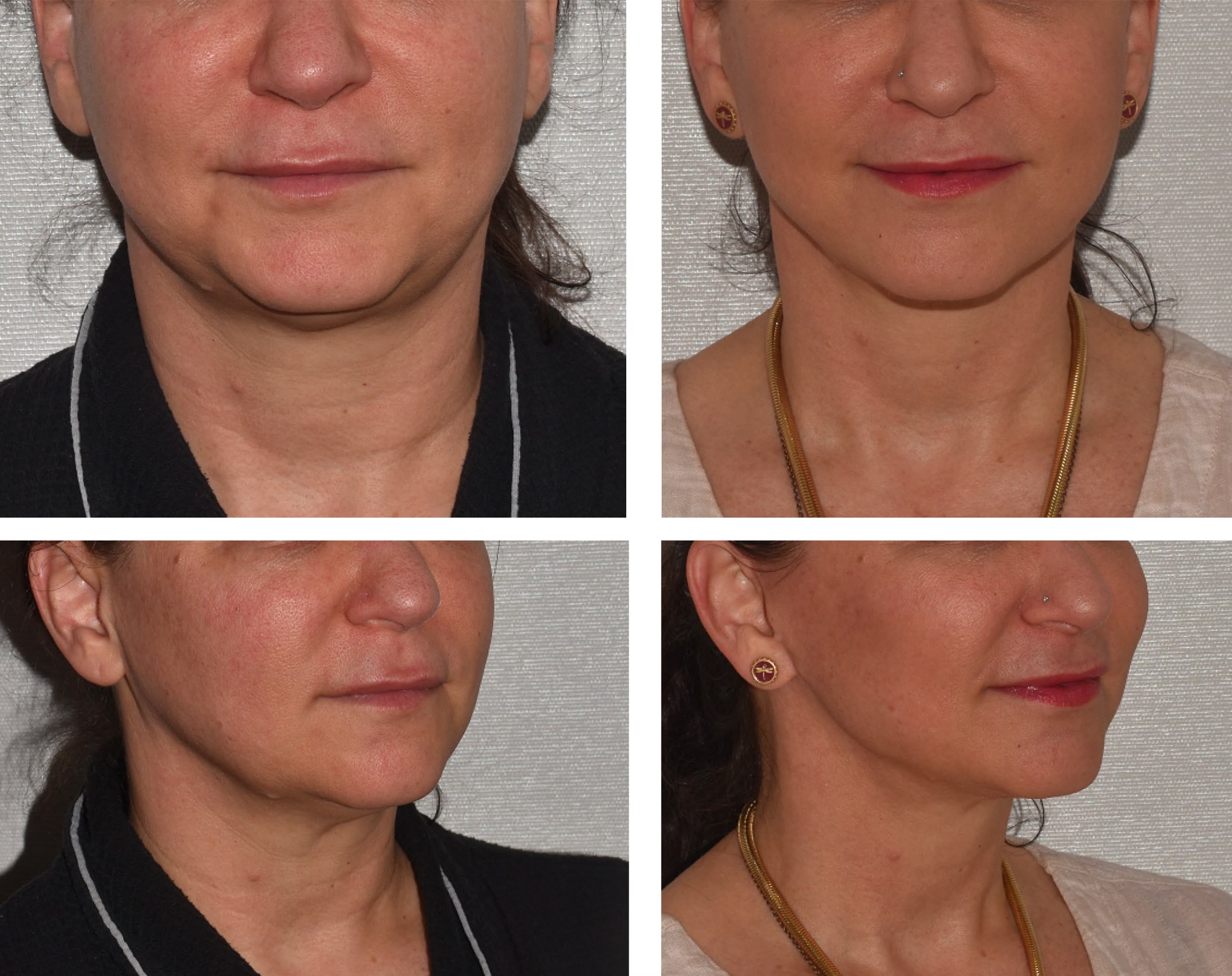
Facelift
Photo set 01
Individual results may vary.


A facelift, also known as rhytidectomy, lifts sagging skin, smooths deep wrinkles, and restores natural contours to your face and neck.
Dr. Darren Smith, board-certified by the American Board of Plastic Surgery, performs this surgery in his QUAD A accredited surgical suite in the Ritz Tower at 111 East 57th Street.
A facelift surgery provides long-lasting results for individuals looking to reduce wrinkles, lines, and visible signs of aging while maintaining a refreshed, natural appearance.
Facelift
Photo set 01
Individual results may vary.
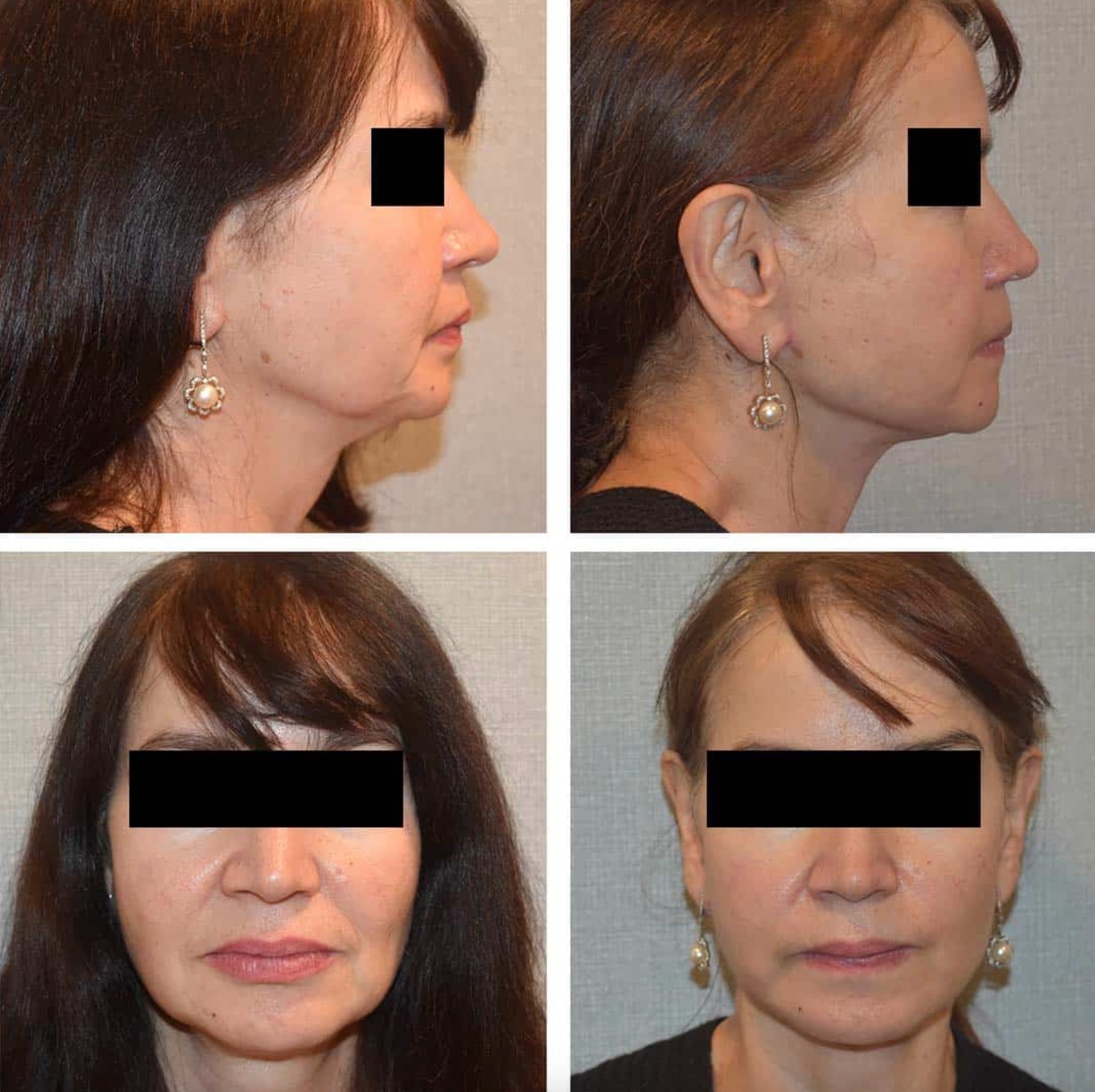
Facelift
Photo set 02
Individual results may vary.
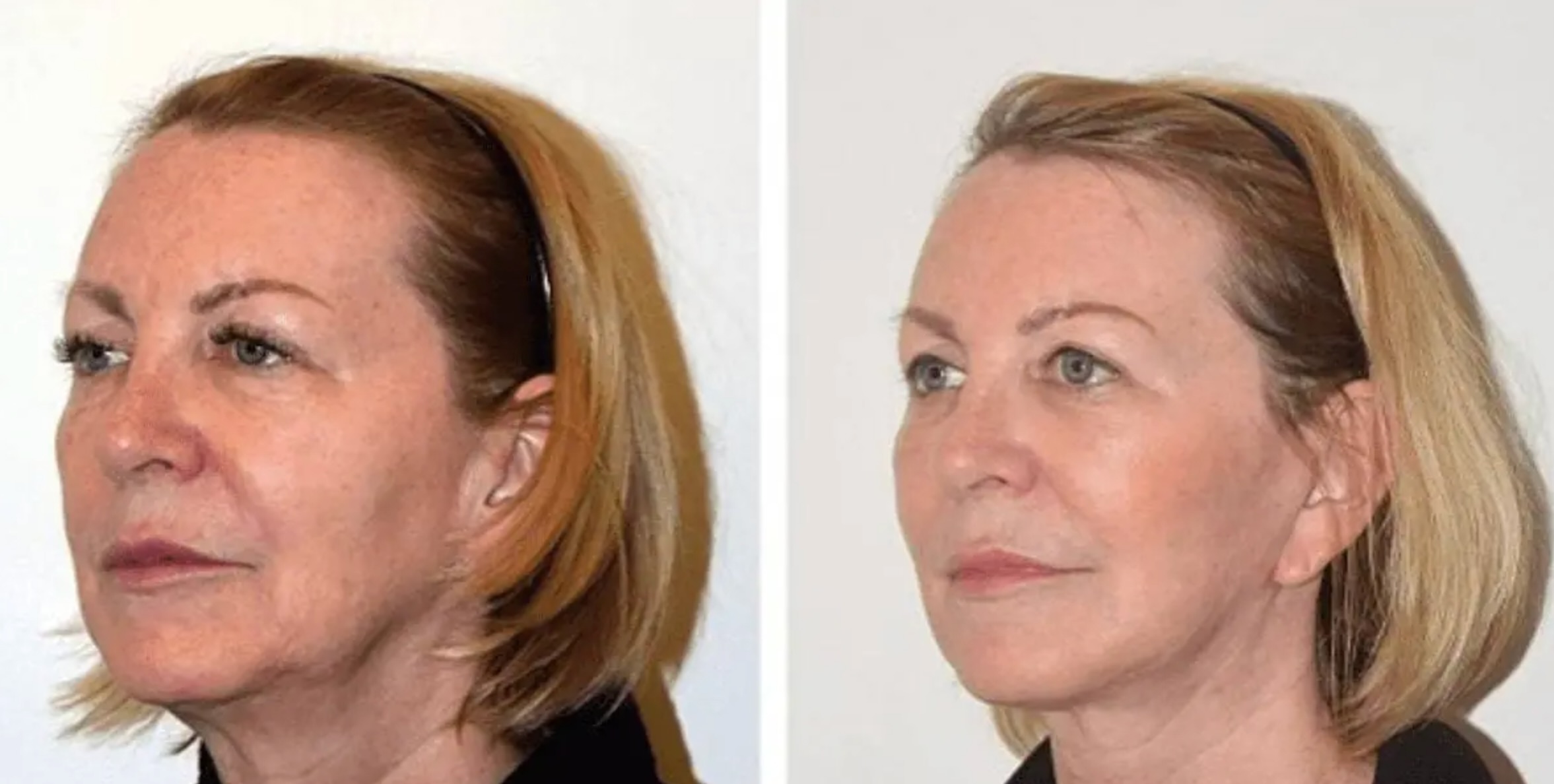
Facelift
Photo set 03
Individual results may vary.
Individual results may vary.
Facelift surgery, or rhytidectomy, focuses on lifting and tightening the face and neck for a smoother, more refreshed look. It removes loose skin, firms underlying tissue, and enhances facial contours to address sagging, wrinkles, jowls, and volume loss.
My explanation of a facelift starts with structure. I look at how the facial tissues have shifted and how that changes the relationship between the cheeks, jawline and neck. A tighter skin surface alone is not the whole goal; the plan needs to address the tissues contributing to your concern.
I think of it as resetting a clock rather than stopping it. Surgery changes the starting point from which your face continues to age. That helps explain both what a facelift can accomplish and why it cannot preserve one appearance indefinitely.
The right time is not defined by a birthday. I consider the changes present, the result you want and the tradeoffs you are willing to accept. That discussion helps us choose an appropriate extent of surgery instead of assuming that a particular age or technique name supplies the answer.
From your first visit to your final result, here is how the facelift process unfolds.
The right operation follows from three observations Dr. Smith makes at the consultation: how far the cheek and jowl tissue has descended, how much elasticity the skin retains, and what is happening in the neck.
None of these choices is about age alone. Two people of the same age can need very different operations.
A mini or MACS lift has limits. A heavy neck, pronounced neck bands, substantial loose skin or marked descent through the middle of the cheeks usually calls for a more extensive plan. Choosing a smaller operation simply because it sounds easier can leave the main concern untreated.
Dr. Smith considers a more extensive SMAS or deep plane operation when more tissue needs to be released and repositioned. His aim is to match the operation to the amount and location of aging. See mini facelift candidacy and limitations for the smaller-operation option.
The choice comes from examination of your cheeks, jawline, skin and neck, together with your health and previous procedures. A technique name alone cannot predict how much correction you need, how quickly you will recover or how long the result will last.
A deep plane facelift releases selected deeper retaining ligaments and repositions the skin and SMAS together, with a relatively limited area of skin undermining. Dr. Smith’s preservation refinement reduces that skin separation further. He chooses between these approaches according to the tissues he needs to move and preserve, rather than treating them as unrelated operations.
Explore deep plane facelift in NYC and Dr. Smith’s preservation facelift approach for more about candidacy, recovery and consultation planning.
A facelift repositions descended tissues and addresses loose skin in the face and, when included in the plan, the neck. It does not address every change in an aging face. Dr. Smith distinguishes tissue position, skin quality and lost volume when explaining what the operation can accomplish and what may need a different approach.
Repositions descended facial tissues to improve cheek and jawline contours.
Addresses jowls and loose skin according to the extent of the operation.
Includes neck treatment when indicated; the specific neck steps are planned separately.
Does not replace treatment directed at skin texture or every fine line.
Lost facial volume may need separate assessment; lifting and adding volume are different decisions.
Leaves scars and does not stop aging; individual results and healing vary.
For vertical neck bands or significant platysma looseness, Dr. Smith includes platysmaplasty, which tightens this muscle layer. He uses conservative submental liposuction for superficial fat beneath the chin. When deeper structures contribute to fullness, selected patients may need removal of fat beneath the platysma, gland reduction or reduction of the digastric muscles under the jaw. These deeper steps are individualized, rather than included in every facelift. The neck lift guide explains how the neck is assessed.
Watch one facelift and neck lift patient describe choosing her surgeon
Dr. Darren Smith is board-certified by the American Board of Plastic Surgery and has completed fellowship training in both aesthetic surgery and craniofacial surgery. He has performed hundreds of complex facial plastic surgeries and brings years of specialized experience in facial aesthetic surgery. He performs facelift surgery himself, in his QUAD A accredited surgical suite in the Ritz Tower.
Dr. Smith's practice is in the Ritz Tower at 111 East 57th Street, a small private setting rather than a large surgical center. Surgery is performed in his QUAD A accredited in-office operating suite, with anesthesia given by a board-certified anesthesiologist. Private nursing and luxury recovery amenities are available to patients who want them.
Schedule a consultation to find out whether a facelift suits you.
Every surgery carries risk. A facelift is no exception: bleeding, infection, nerve injury, poor scarring and asymmetry are all possible. No surgeon can guarantee how any individual will heal, and Dr. Smith goes through the risks that apply to your anatomy and health before you decide.
These risks are discussed during a consultation with Dr. Smith so that you feel fully informed and confident in your decision.
Every patient spends the first night in the practice's private overnight surgical suite with Dr. Smith's nursing team, then returns home or to a hotel the next day. Expect the first three days to be the most uncomfortable, with tightness and a dressing. Swelling typically builds through the first week before it starts to subside, and bruising drifts downward into the neck as it fades. Sutures in front of the ear are removed at five to seven days. Those behind the ear and in the scalp are absorbable.
Visible bruising and most early swelling usually settle over two to four weeks, and by around two weeks many patients are comfortable in public with makeup and back at a desk. Light walking is encouraged from the first days. Light cardio can usually resume at two to three weeks, and strenuous exercise and heavy lifting at four to six weeks, with Dr. Smith's clearance. Numbness around the ears and firmness beneath the skin are normal for several weeks and settle over months. Final results are judged at six months to a year.
Scars are placed in the temporal hairline, along the natural contours of the ear and in the crease behind it, with a short scar under the chin when the neck is treated. The exact course in front of the ear, including whether it runs inside or just in front of the tragus, depends on the patient's anatomy. Scars are pink or red for the first few months, generally lighten by four to six months and typically mature into fine pale lines over the first year. A small number of patients develop thickened scars that may need treatment.
Dr. Smith plans the hairline incisions so the sideburn and the hair behind the ear keep their natural position. In the facelift approaches he uses, the lift is carried by the deeper tissues so the skin can be closed with little tension, which helps the scars mature well.
Pricing varies depending on the technique, anesthesia, and specific treatment plan. You’ll receive a full breakdown during your consultation, and financing is available through CareCredit and Alphaeon Credit.
Dr. Smith is out of network with all insurance plans, and a facelift is a cosmetic procedure that insurance does not cover. Financing through CareCredit and Alphaeon Credit is available, and the $500 consultation fee is applied toward any procedure you book.
There is no single best age for a facelift. Dr. Smith considers the changes in your face and neck, your health, your goals and the tradeoffs you are willing to accept. The timing and extent of surgery should follow that assessment, rather than a birthday or a technique name.
Discomfort is manageable with sedation, medications, and long-acting pain relief like Exparel.
A facelift changes facial contours, but aging continues afterward. How the result develops depends on your anatomy, skin, the operation and subsequent changes over time. I think of surgery as resetting a clock, not stopping it; there is no fixed number of years that can be promised for an individual result.
The length of surgery depends on the facelift technique, the extent of correction and any additional procedures in the same plan. These decisions are made around your anatomy and goals. At consultation, ask for the estimated operating time and the total time to allow at the surgical facility; the recovery timeline is a separate part of planning.
Recovery time varies, but most people resume light activity within 10-14 days and experience full healing over several months.
Tell the practice about upcoming work, social events and travel before choosing a surgery date. Ask when you should arrange help, return for checks and expect to feel comfortable being seen in public. Those are different milestones. Confirm who to contact with concerns and which activities require clearance for your individual operation.
Use the Recovery Planner to organize the practical questions you want to discuss with the practice.
Usually, yes. Dr. Smith aims for a result that looks rested rather than tight or operated on. No surgeon can guarantee how a particular face will heal, and the result depends on your anatomy, your skin, and how you heal.
Dr. Smith performs facelift surgery for patients from Manhattan, the wider New York area and out of town at his practice on the ground floor of the Ritz Tower, 111 East 57th Street, New York, NY 10022. Surgery takes place in the practice's accredited on-site surgical facility.
Consultations are in person, and out-of-town patients can begin with a video consultation, followed by an in-person visit before surgery. Every consultation begins with the features you want to keep rather than the ones you want to change. Call 212-633-0627 or request a consultation online. A $500 consultation fee is credited toward surgery.
YOUR NEXT CHAPTER
Discuss your priorities, ask questions and explore treatment options with our team.
Our practice is located at the Ritz Tower, 111 East 57th Street in Midtown Manhattan. We welcome patients from the five boroughs and the surrounding tri-state area. If you are traveling for care, explore our guide for out-of-town patients.
Request a consultation