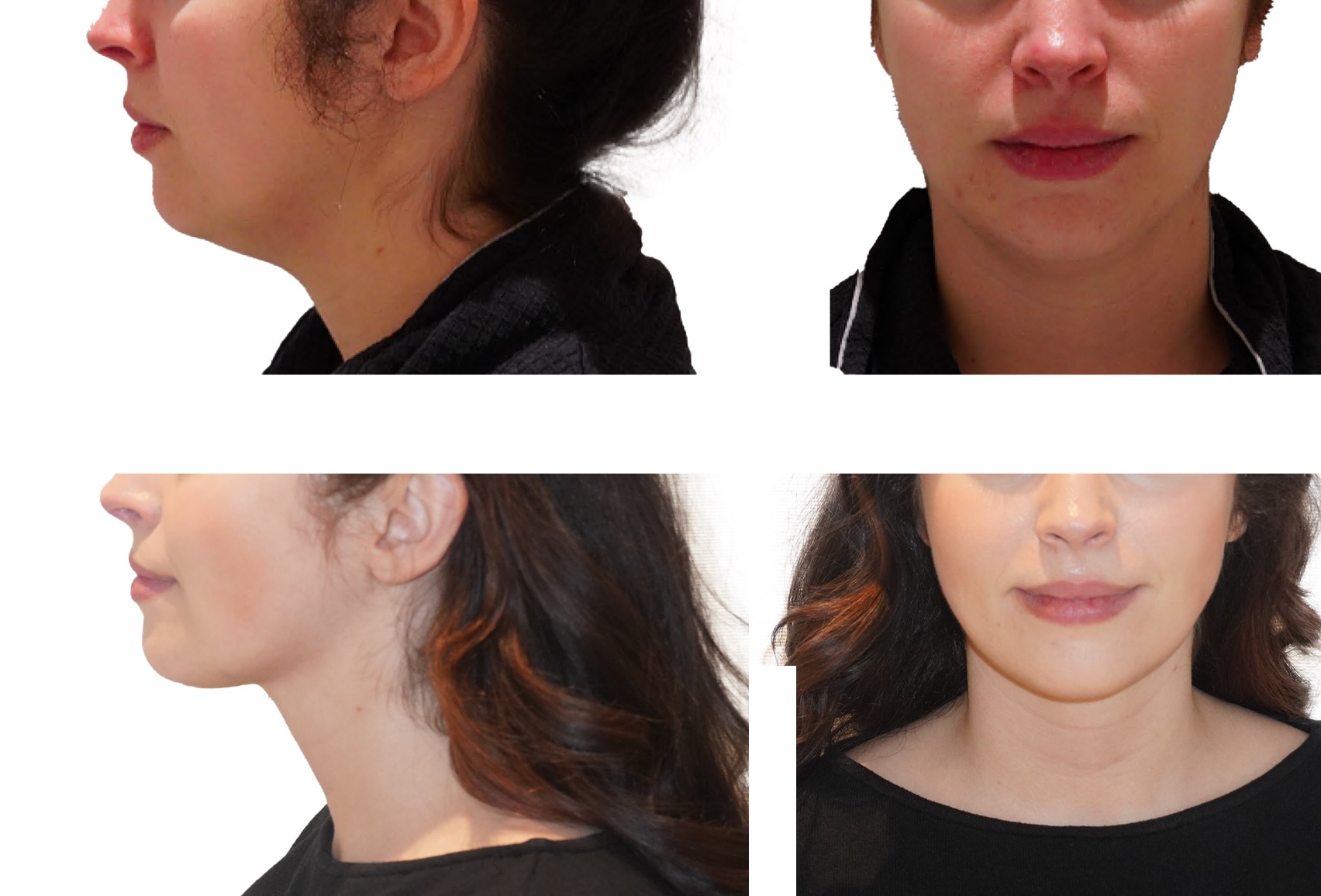
Chin Liposuction and FaceTite
Case 1
Individual results may vary.


Chin Liposuction and FaceTite
Chin Liposuction and FaceTite
Case 1
Individual results may vary.
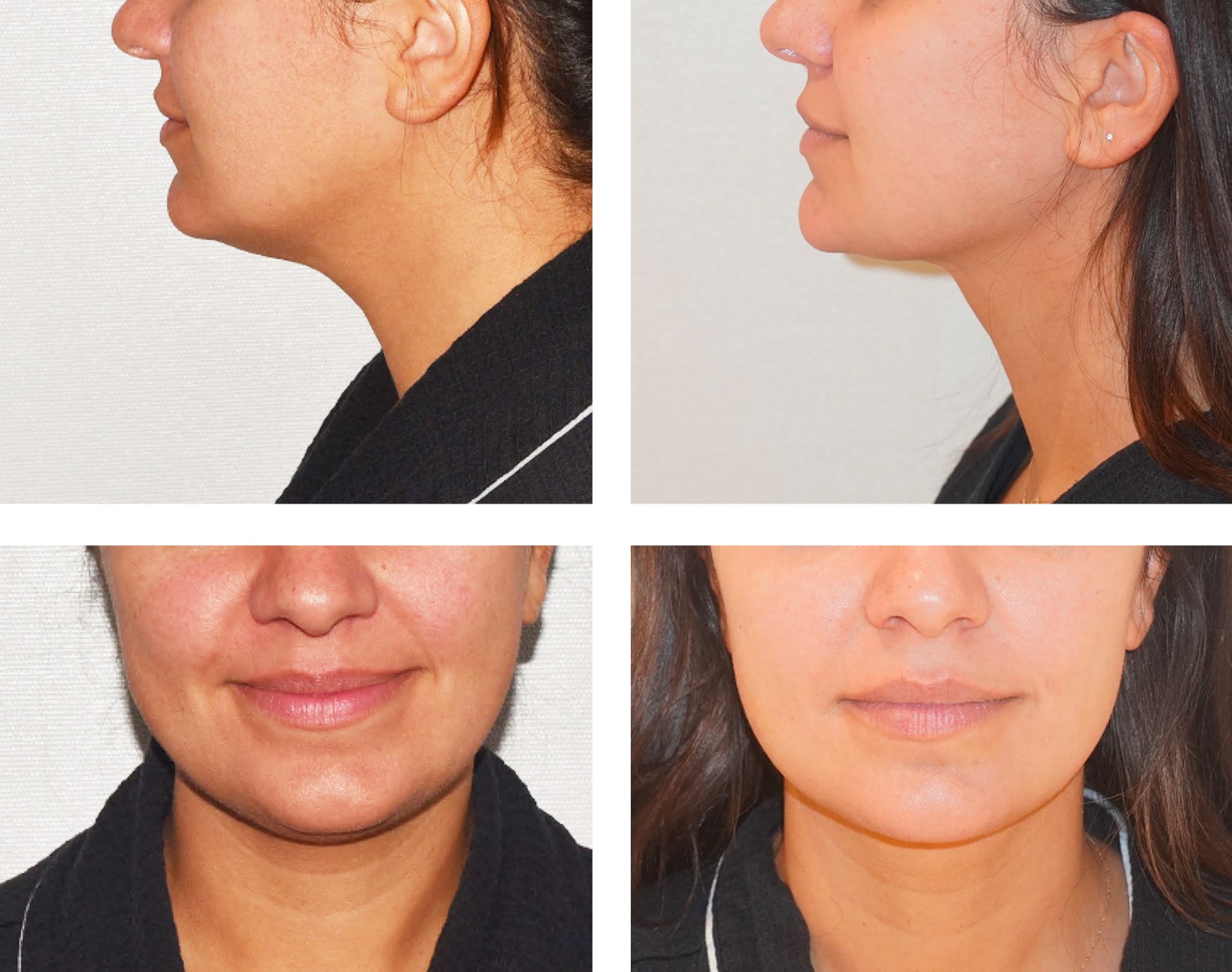
Chin Liposuction and FaceTite
Case 2
Individual results may vary.
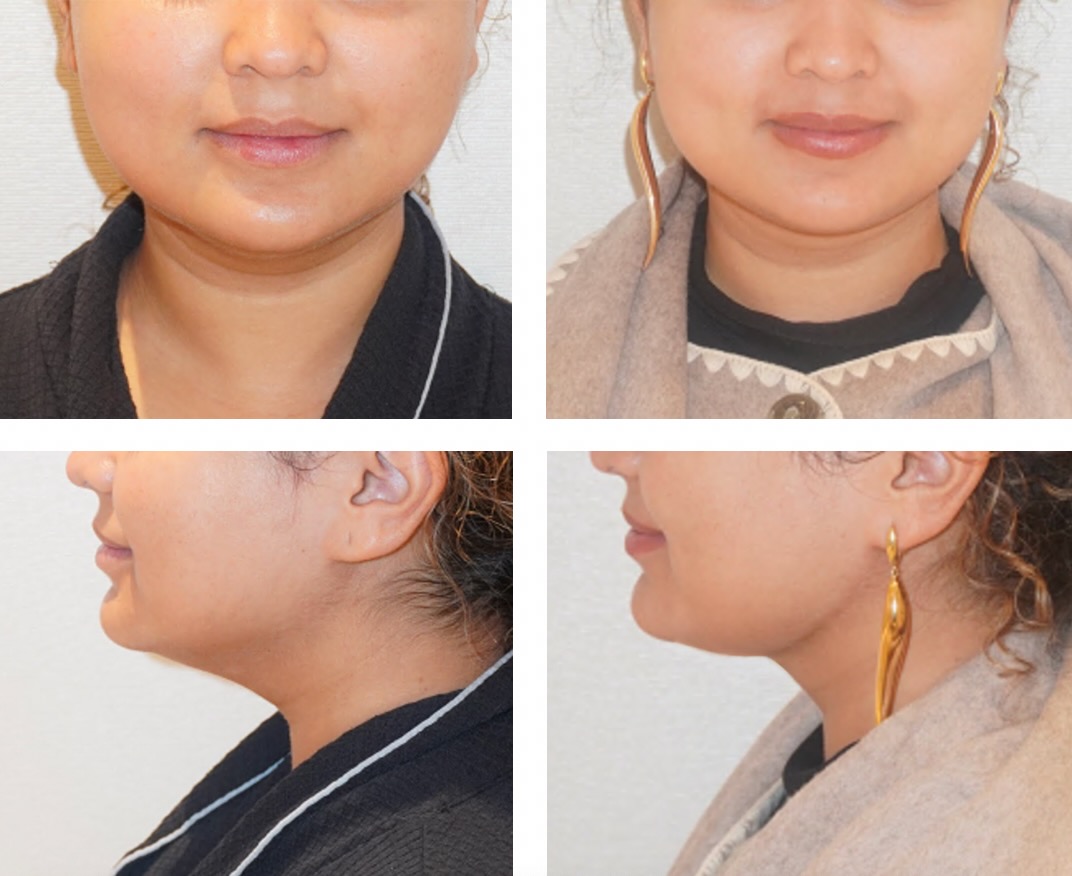
Chin Liposuction and FaceTite
Case 3
Individual results may vary.
Individual results may vary.
This healthy woman in her mid-forties wanted to improve her under-eye contour with a minimally invasive treatment.

FaceTite and AccuTite are minimally invasive bipolar radiofrequency devices that Dr. Darren M. Smith uses to treat mild to moderate skin laxity. They work in the same way; the main difference is the size of the applicator.
In his Manhattan practice, Dr. Smith generally uses FaceTite for the jawline, under the chin and the neck, and the smaller AccuTite for selected areas of the face. Treatment choice depends on the area, the amount of loose skin and the result you are hoping to achieve.
The device names can be misleading. FaceTite is the larger of the two; AccuTite has a smaller applicator that allows more precise treatment in small, delicate areas.
The distinction below describes how Dr. Smith chooses between them in his practice. It is not a rule that either device can only be used in those locations.
| Device | Dr. Smith’s usual treatment areas |
|---|---|
| FaceTite | The larger applicator is generally used for the jawline, the area under the chin and the neck. |
| AccuTite | The smaller applicator is used for more precise treatment on the face itself, including selected areas of the lower eyelids, cheeks and other small, delicate spots. |
Radiofrequency treatment does not remove substantial excess skin. Depending on your anatomy and goals, eyelid surgery, a neck lift or a facelift may be more appropriate. If fat beneath the chin is part of the concern, chin liposuction may be discussed separately or in combination. The patient examples on this page include FaceTite with chin liposuction and AccuTite treatment of the lower eyelids. The procedure is identified with each case.
Potential complications include burns, prolonged swelling, firmness or nodules, contour irregularities, infection and nerve injury. These treatments require careful patient selection and technique; a smaller device does not eliminate risk. Dr. Smith will review the considerations for your treatment area and alternatives during consultation.
Clinical background: published lower-face and neck bipolar radiofrequency study.
Both devices deliver radiofrequency energy between an internal electrode placed beneath the skin through a small entry point and an external electrode on the skin surface. The controlled heating is used to contract and remodel soft tissue.
Published clinical literature describes FaceTite and AccuTite as options for selected patients with mild to moderate laxity. Results depend on anatomy, treatment extent and healing; these devices do not remove a large amount of excess skin.
Although the entry points are small, these are invasive treatments with a healing period and potential complications. Small scars can occur, and radiofrequency treatment does not produce the same change as excisional surgery.
To have a clear understanding of what to expect before, during, and after a FaceTite or AccuTite treatment, here are the key steps involved in the procedure:
FaceTite and AccuTite may improve mild to moderate laxity through small entry points. They are not suitable for every concern and are not a substitute for removing substantial excess skin. Dr. Smith will help you compare the likely benefit with the recovery, risks and alternatives.
Dr. Smith generally chooses FaceTite for the jawline, under the chin and neck, and AccuTite for selected smaller facial areas such as the cheeks and lower eyelids.
Radiofrequency heating can produce tissue contraction and remodeling. The amount of improvement varies; treatment does not guarantee a particular degree of tightening.
The devices are introduced through small skin openings. These may leave small scars, and swelling or bruising can still be visible during recovery.
After FaceTite, use about one week as a provisional office-work estimate, inferred by the Recovery Planner from its light-activity milestone. After AccuTite, Dr. Smith’s usual office-work milestone remains about 48 hours. The demands of your work and your recovery can change these estimates. Returning to work does not mean swelling has completely resolved.
Compression is the main difference in aftercare. The following is Dr. Smith’s usual recovery protocol for FaceTite and AccuTite; your instructions may change with the treatment area, healing or additional procedures.
Compression, work and exercise:
Swelling, bruising and tenderness may persist after you return to work. Improvement develops over the following months; recovery milestones are estimates, not guarantees.
For FaceTite garment fitting, see the compression-garment demonstration and instructions on our chin liposuction page. AccuTite generally does not require a garment unless your individual treatment plan calls for one.
Fees for FaceTite and AccuTite are quoted individually after your consultation and depend on the areas treated, whether the treatment is combined with other procedures, and the anesthesia plan. We itemize the surgeon’s fee, anesthesia, and facility charges so you know the full figure before you schedule. Financing is available through CareCredit and Alphaeon Credit, and the $500 consultation fee is applied toward any procedure you book.
Dr. Smith is board-certified by the American Board of Plastic Surgery and practices in Manhattan. A consultation considers the cause of your concern, the amount of laxity and whether radiofrequency treatment is likely to meet your goals.
FaceTite and AccuTite may be options when mild to moderate laxity is the main concern. The aim is an improvement suited to your anatomy; these treatments do not provide the same correction as a facelift or other skin-removal surgery.
If you would like to learn more about how FaceTite or AccuTite may benefit you, schedule a private consultation with Dr. Smith today.
At your consultation, Dr. Smith will explain which device or alternative he recommends, the expected recovery and an individualized cost estimate.
This video shows AccuTite treatment of the brow under local anesthesia. The small applicator allows targeted treatment through a small entry point. Dr. Smith assesses whether radiofrequency treatment can address the concern or whether a surgical brow lift would be more appropriate. His usual office-work milestone is about 48 hours; swelling and bruising may last longer.
This video demonstrates AccuTite treatment of a small chin or jawline area. It is an example of a selected use of the smaller device; Dr. Smith generally chooses FaceTite for broader treatment of the jawline, under the chin and neck. Small entry points do not mean there will be no visible swelling, bruising or scars.
This video shows AccuTite treatment near the eyelid under local anesthesia. Dr. Smith considers the smaller device for selected areas of mild to moderate laxity, including the lower eyelids. Significant excess skin or other eyelid concerns may require blepharoplasty or another approach. The usual return to office work is about 48 hours, with individual variation.
Dr. Smith’s practice is located at the Ritz Tower, 111 East 57th Street, Ground Floor, New York, NY 10022, in Midtown Manhattan. The office welcomes patients from across the five boroughs, the tri-state area, and well beyond.
At your Manhattan consultation, discuss the areas you want to treat, your work and exercise schedule, and whether you are traveling for care. The team will review your individual aftercare and follow-up arrangements before treatment.
YOUR NEXT CHAPTER
Discuss your priorities, ask questions and explore treatment options with our team.
Our practice is located at the Ritz Tower, 111 East 57th Street in Midtown Manhattan. We welcome patients from the five boroughs and the surrounding tri-state area. If you are traveling for care, explore our guide for out-of-town patients.
Request a consultation