
Autoaugmentation Breast Lift in NYC
An autoaugmentation breast lift reshapes the breasts using tissue already present in the breast. In suitable patients, this tissue can be repositioned to improve upper-breast fullness as part of a lift, without an implant. The procedure changes how existing tissue is distributed; it does not create a net increase in breast volume.
Dr. Darren M. Smith considers autoaugmentation for patients who want a lifted, proportionate shape and have enough breast tissue to support that plan. At your Manhattan consultation, you will discuss your goals, the shape your tissue may achieve, and the alternatives that fit your anatomy.
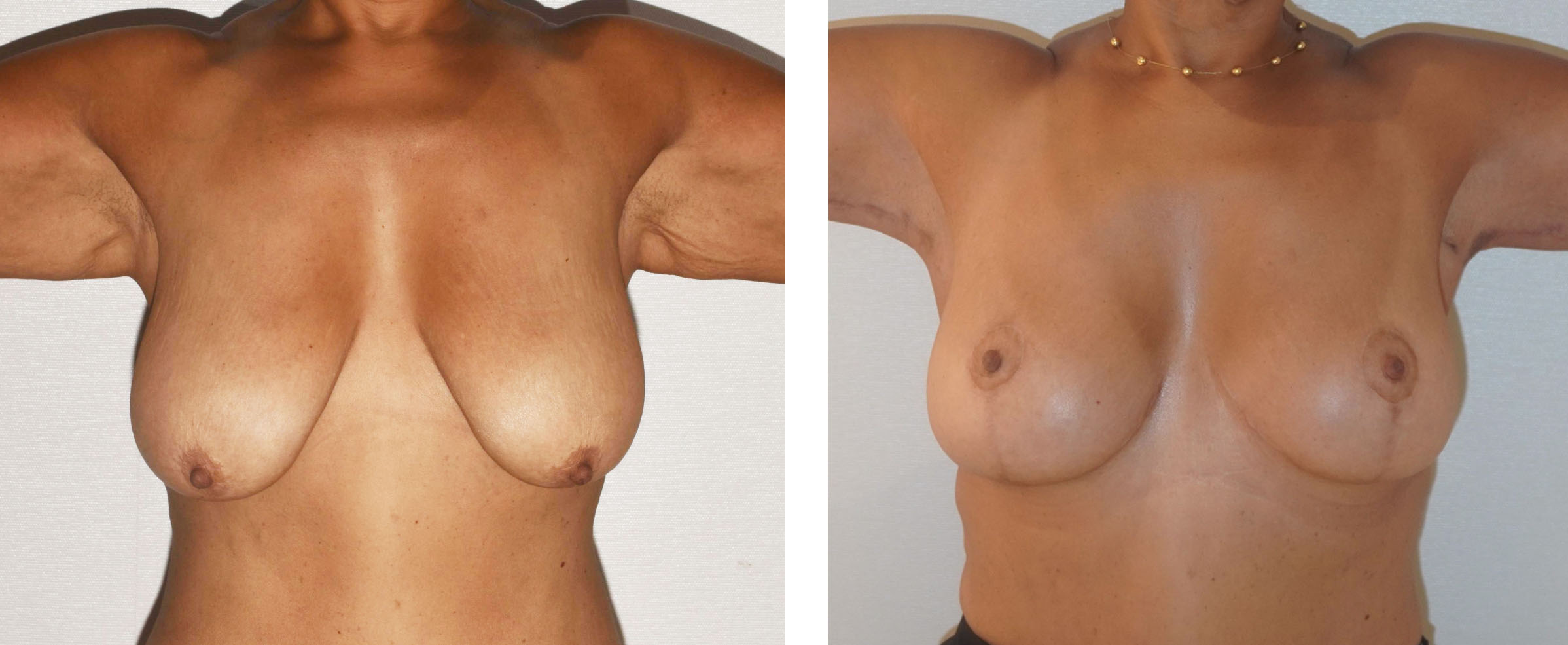
Before, one week after, and two weeks after surgery
One patient, three time points
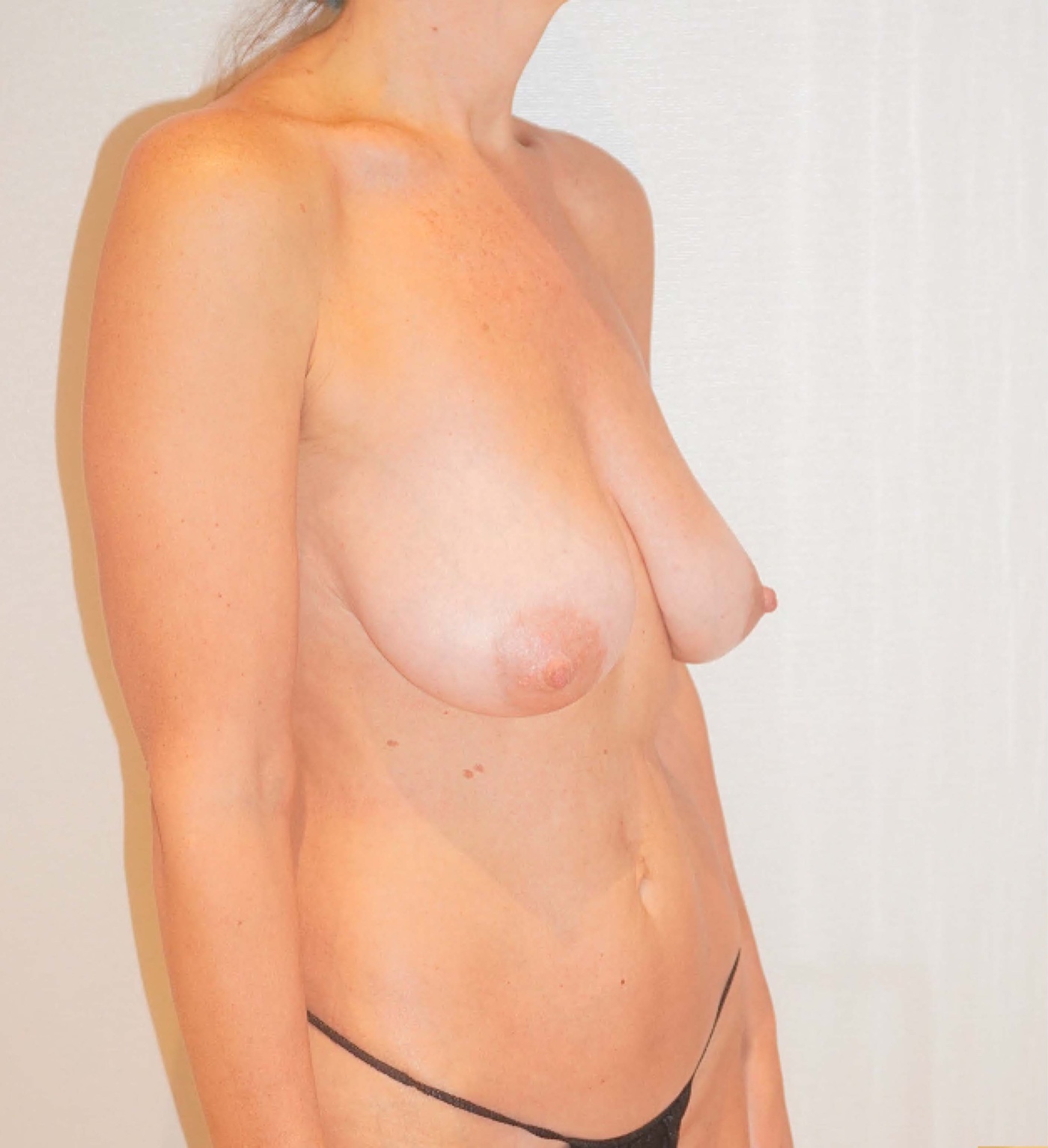
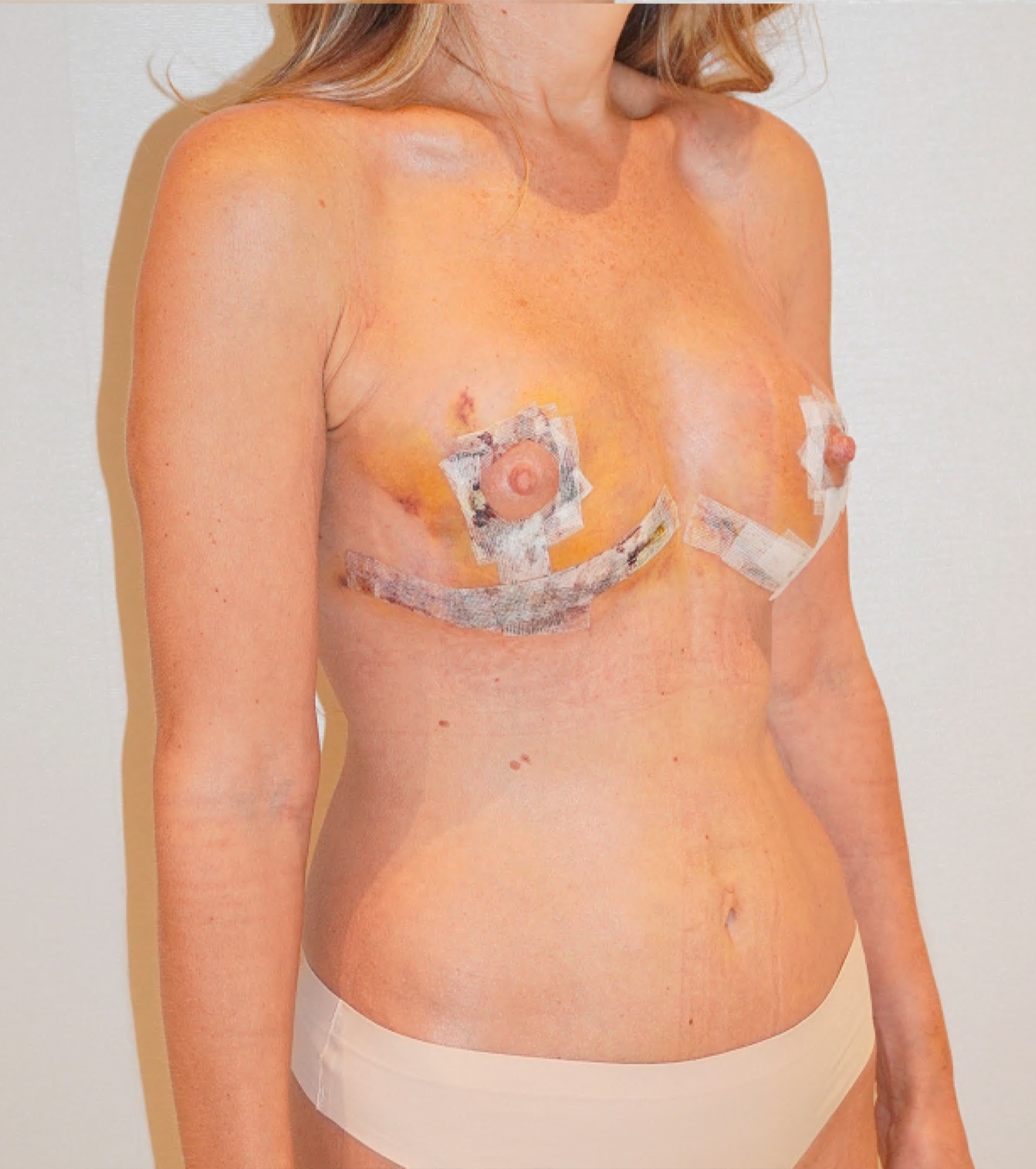
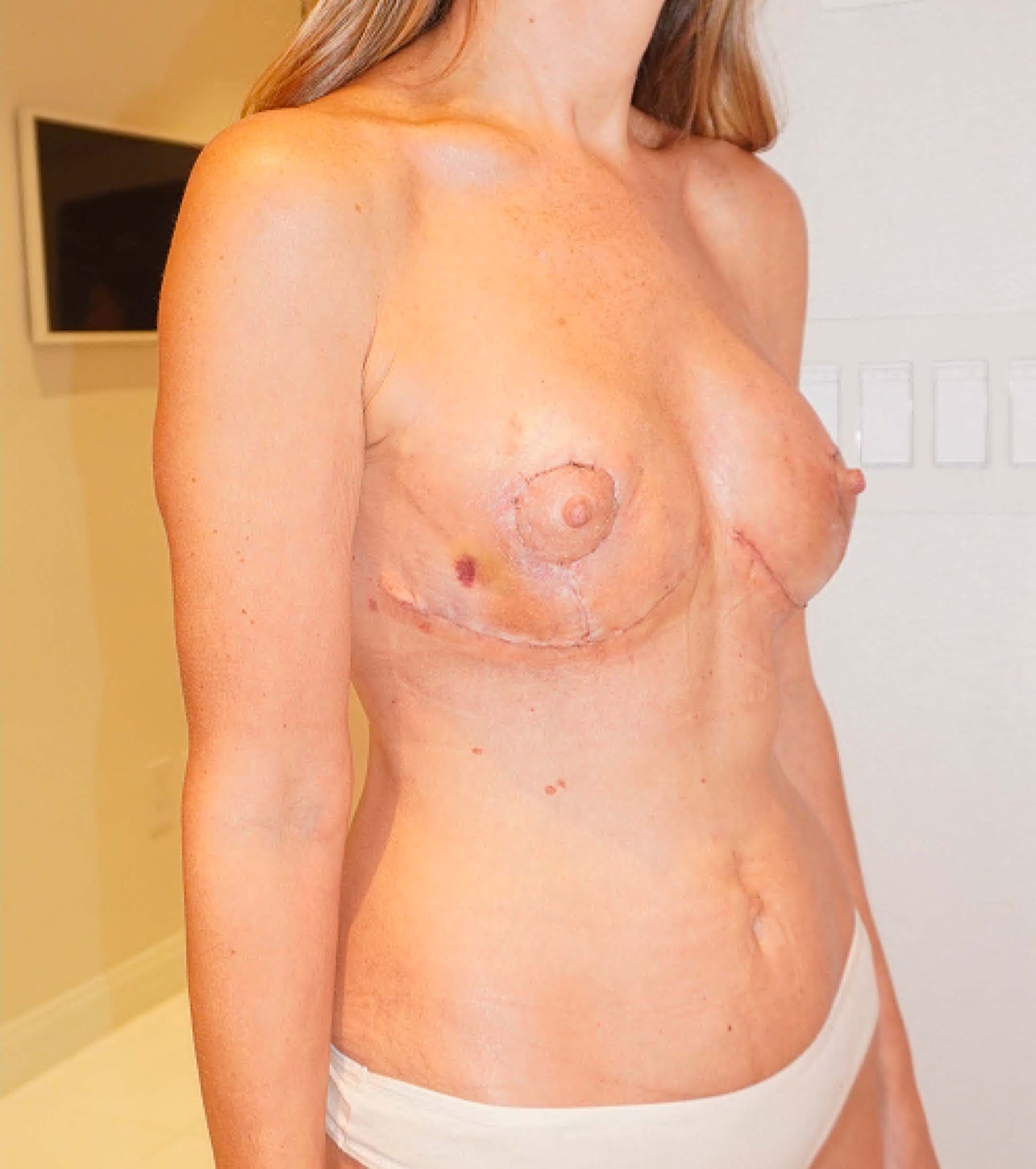
This woman in her forties underwent a breast lift with autoaugmentation. She wanted a natural, lifted shape that was proportionate to her frame, with more structure in the upper breast and no implant. Autoaugmentation was an important part of planning around those goals.
Before surgery
1 week after surgery
2 weeks after surgery
What can breast autoaugmentation change?
Autoaugmentation can help redistribute fullness within the breast. Depending on the anatomy and surgical plan, tissue from the lower breast may be repositioned higher to support the intended contour. It can be incorporated into a breast lift and, in selected cases, a breast reduction.
The distinction between shape and size matters. A patient may want a higher breast position, more upper-pole fullness, smaller breasts, or a combination of these changes. Autoaugmentation uses the tissue available to help address shape. It does not guarantee a particular cup size, projection, or contour.
Who may be a candidate for autoaugmentation?
Autoaugmentation may be worth discussing if you want a breast lift, prefer to avoid implants, and have enough existing breast tissue to redistribute. You should also be comfortable with the fact that rearranging tissue does not add new breast volume.
Dr. Smith evaluates breast and nipple position, tissue distribution, skin characteristics, and how the breasts relate to your frame. Your medical history and expectations are also part of assessing whether surgery is appropriate.
If your main goal is a substantial increase in size, or there is limited tissue available to reposition, other options may better address your priorities. A preference to avoid implants is an important starting point; the consultation determines what your anatomy can realistically support.
Autoaugmentation, fat transfer, and implants: how do they differ?
These approaches change fullness in different ways. They can be discussed alongside the need for a lift, which addresses breast shape and position.
| Approach | What it uses | What to understand |
|---|---|---|
| Autoaugmentation | Tissue already present in the breast | Redistributes existing tissue without creating a net increase in breast volume. |
| Fat transfer | Fat collected from another area and injected into the breasts | Adds transferred tissue; some fat is reabsorbed, and retained volume varies. |
| Breast implants | An implanted device | Adds volume; whether a lift is also needed depends on breast position and the surgical plan. |
Dr. Smith will discuss which approach fits your desired shape, available tissue, and preferences. Wanting upper-breast fullness does not automatically mean that an implant, fat transfer, or autoaugmentation is appropriate for you.
Explore breast lift surgery, fat transfer to the breasts, and breast augmentation with implants.
How Dr. Smith plans a lift with autoaugmentation
The consultation separates three related decisions: where the breasts should sit, how fullness should be distributed, and whether you want a change in overall size. This helps establish a reason for each part of the surgical plan.
Dr. Smith considers how much tissue is available to reshape and explains the contour he believes is achievable. He also discusses the incision pattern, scars, alternatives, and tradeoffs. Autoaugmentation is one technique that may support the plan; it is not necessary for every lift or reduction.
If reducing breast size is also a goal, the discussion may include breast reduction with reshaping of the remaining tissue. Whether a reduction is appropriate depends on your desired size and available tissue.
Scars and surgical risks
An autoaugmentation breast lift requires incisions. Their pattern depends on the lift or reduction being performed and your anatomy. Scars are permanent, although their appearance changes as healing progresses.
Potential complications include bleeding, infection, wound-healing problems, asymmetry, changes in breast or nipple sensation, fat necrosis, and an unsatisfactory contour. Additional surgery may be needed. This is not an exhaustive list; Dr. Smith will discuss the risks relevant to your procedure and medical history. Using your own tissue does not remove the risks of surgery.
Read the American Society of Plastic Surgeons’ breast-lift safety information.
Recovery after an autoaugmentation breast lift
Recovery instructions depend on the full operation and your individual healing. Your plan will address support garments, incision care, follow-up visits, and restrictions on lifting and exercise.
Before surgery, discuss your work duties, commute, childcare, and any activities that involve lifting or exertion. These practical details help you plan support and understand the instructions that apply to you.
The one- and two-week photographs above show two moments in one patient's early recovery. They are not a timetable for clearance to work, exercise, or other activities. Your surgical team will guide those decisions. Breast shape and scar appearance continue to evolve beyond the early postoperative period.
For additional context, see the breast-lift procedure and recovery guide.
What does an autoaugmentation breast lift cost in NYC?
Autoaugmentation breast lift with Dr. Darren Smith in NYC starts at $25,000. Your final quote depends on the complete surgical plan, including whether a reduction or another procedure is also planned. After consultation, the practice will provide a personalized quote and explain what is included.
For help understanding fees and comparing estimates, see our guide to breast procedure costs in NYC.
Your consultation with Dr. Darren Smith in Manhattan
Dr. Darren M. Smith, MD, FACS, is certified by the American Board of Plastic Surgery. His training includes plastic surgery residency at the University of Pittsburgh and fellowships in craniofacial surgery and aesthetic surgery.
The practice is located at 111 East 57th Street, Ground Floor, New York, NY 10022, in Midtown Manhattan. At your consultation, you can explain what you want to change about breast position, upper-breast fullness, and size, and discuss whether autoaugmentation fits those goals.
Bring questions about your available tissue, proposed scars, recovery around work or childcare, and alternatives if a different approach would be more suitable.
Read Dr. Smith’s training and professional background
Request an autoaugmentation consultationCall 212.633.0627.
Questions about breast autoaugmentation
Is an autoaugmentation breast lift the same as a breast lift without implants?
Autoaugmentation is one approach that can be used during an implant-free breast lift. It specifically uses rearranged breast tissue to support the planned contour. A lift without implants does not necessarily include autoaugmentation.
Will autoaugmentation make my breasts larger?
Autoaugmentation does not add new breast volume. Repositioning existing tissue may create more fullness in a particular area while overall volume stays similar or decreases if a reduction is also performed. Your likely size and shape changes should be discussed together.
Is autoaugmentation the same as fat transfer?
No. Autoaugmentation rearranges tissue already within the breast. Fat transfer involves collecting fat from another area and injecting it into the breasts. The amount of fat that remains after healing varies.
Are two-week photographs the final result?
No. Two weeks is an early postoperative stage. Breast shape, swelling, and scar appearance continue to change. Later follow-up photographs provide a different view of the healing process.
Can autoaugmentation be combined with breast reduction?
In selected patients, yes. Reducing overall breast volume and redistributing some remaining tissue to improve contour may be parts of the same plan. Suitability depends on the tissue available and the patient's goals.
How do I find out whether I am a candidate?
An examination and discussion of your goals are needed to assess candidacy. Request a consultation with Dr. Smith at the Manhattan practice to review your anatomy, options, risks, and recovery plan.
Request a consultationInformation on this page is educational and does not replace an individual medical consultation. Patient photographs illustrate individual treatment experiences; individual results vary.