
Botox in NYC
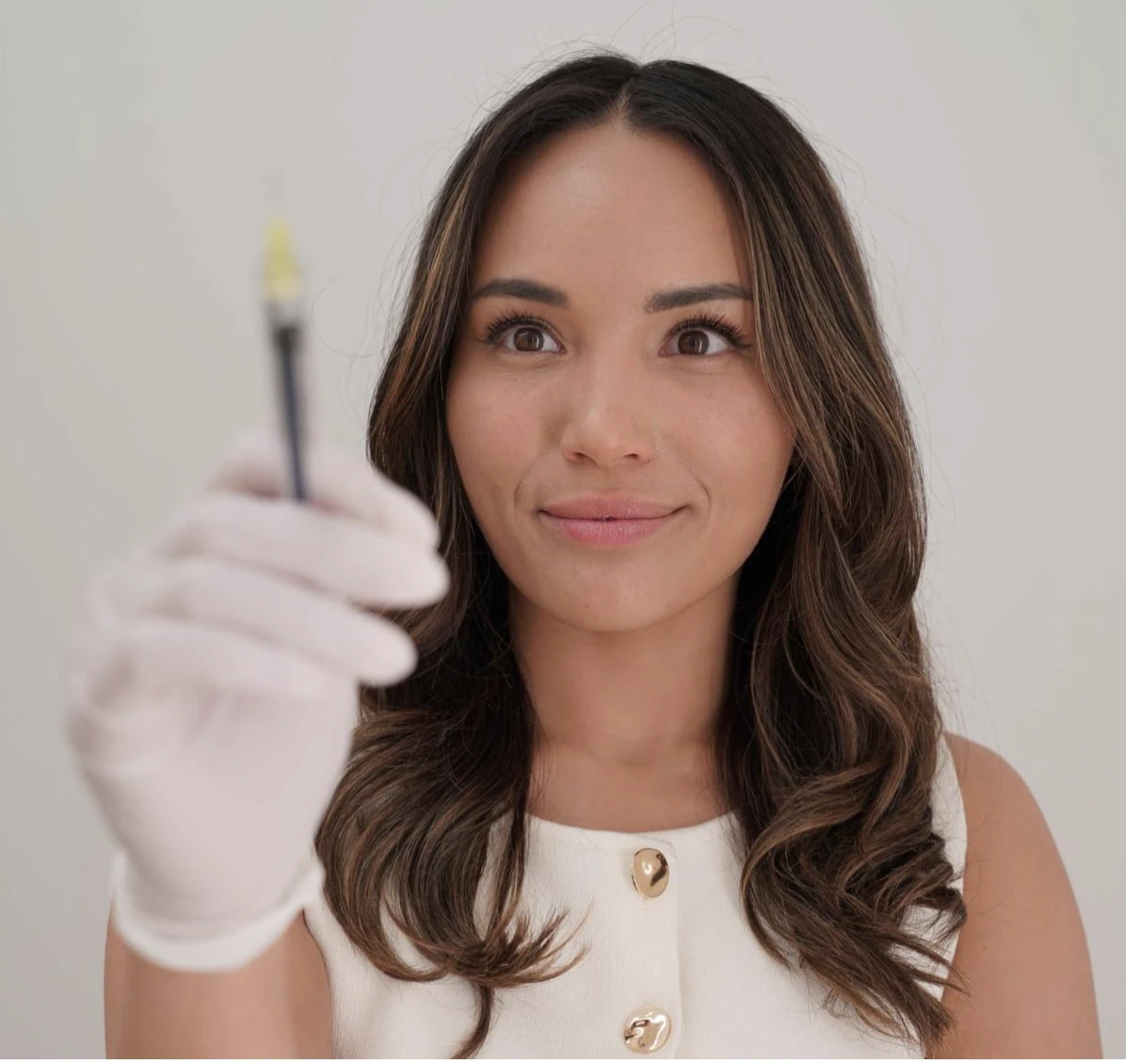
Botox Cosmetic is a purified botulinum toxin type A, injected in small doses to relax the specific facial muscles that create expression lines. Dr. Darren M. Smith performs the injections himself at his Manhattan office. A session takes about fifteen minutes, needs nothing more than a topical numbing cream, and the effect wears off over a few months rather than lasting indefinitely.
What Botox is and how it works
Botox Cosmetic is an FDA-approved prescription drug, not a cleared device. Approved means the product's own safety and effectiveness data went through a full FDA review. It is a preparation of botulinum toxin type A. Injected into a specific muscle, it blocks the nerve signal that makes that muscle contract, so the muscle relaxes and the crease that repeated contraction creates softens.
That mechanism explains what Botox can and cannot do. Lines that appear when you move, called dynamic lines, respond to it. Lines that are visible when the face is completely still, called static lines, sit in the skin itself and are usually addressed with fillers, resurfacing or surgery instead. Most patients have some of both, which is why the assessment matters more than the product.
The effect is temporary. Nerve endings recover, muscle activity returns, and the lines come back. Most patients find the effect fades over three to four months and plan repeat treatment around that.
Which areas Botox Cosmetic is approved for
Botox Cosmetic carries FDA approval for four cosmetic areas. Three of them are on the upper face:
- The frown lines between the brows, known as glabellar lines
- The lines at the outer corners of the eyes, known as lateral canthal lines or crow's feet
- The horizontal lines across the forehead
The fourth approved area is the neck, specifically the vertical platysma bands. Botulinum toxin is injected into other parts of the face by injectors generally, but those uses fall outside the approved labeling. Dr. Smith discusses any such use with you directly at consultation, including what is and is not established about it, rather than presenting it as a routine service.
The forehead is rarely treated on its own. The muscle that lifts the brow and the muscles that pull it down work against each other, so relaxing one without accounting for the other can leave the brow sitting lower than it did before. This is the most common reason a result reads as heavy rather than smooth, and it is a planning problem rather than a product problem.
The consultation and the treatment plan
The consultation starts with what bothers you and how your face moves, not with a dose. Dr. Smith examines the face at rest and in animation, because brow position and muscle strength differ from patient to patient and those two things drive the plan.
- A review of your medical history and current medicines, including anything acting as a blood thinner and any neuromuscular condition
- An assessment of brow position, muscle strength and how your lines behave when you animate
- A plain account of which lines will change and which will not
- A dosing plan set out by area
Dosing is individual. Stronger muscles need more product, and a patient who wants to keep visible movement needs less. Dr. Smith treats conservatively at a first session and adds at the two-week check rather than overtreating and waiting for it to wear off.
The consultation fee is $500, and it is applied toward any procedure you go on to book.
What the treatment is like
A Botox session takes about ten to twenty minutes from start to finish.
- The skin is cleaned and the injection points are marked while you animate the area
- A topical numbing cream is applied if you want one
- A series of small injections is placed into the marked muscles with a fine needle
- There is no dressing and no stitch, and you leave and carry on with your day
Most patients describe a brief sting at each injection point. Small raised red spots at the injection sites are normal and settle within an hour.
Botox recovery and when results appear
Most patients go straight back to their day, but the result is not immediate. Muscle relaxation begins around day two or three and is complete at about ten to fourteen days. Two weeks is when the result should be judged and when any adjustment is made. Results vary from patient to patient.
- Stay upright for about four hours after treatment
- Do not rub or massage the treated areas that day
- Leave strenuous exercise, saunas and hot yoga until the following day
- Use acetaminophen rather than an NSAID if you need something for discomfort, since NSAIDs make bruising more likely
- Ice helps if a bruise appears
Dr. Smith sees first-time patients back at about two weeks so the result can be assessed and adjusted where needed.
Safety, side effects and who should not have it
The common side effects are local and short-lived: redness, small bruises, tenderness at the injection points, and headache in the first day or two.
The side effect patients ask about most is a drooping eyelid or a heavy brow. This happens when the medicine reaches a muscle it was not intended to reach. It is uncommon, it is temporary, and it resolves as the effect wears off. Careful placement and conservative dosing are how the risk is kept low.
Botox Cosmetic carries a boxed warning, which is the most serious form of warning the FDA applies to a prescription drug. It covers distant spread of toxin effect. The labeling states that effects consistent with botulinum toxin, including swallowing and breathing difficulty, have been reported hours to weeks after injection, that these effects can be life threatening, and that there have been reports of death. Difficulty swallowing, speaking or breathing after treatment is a medical emergency.
Botox Cosmetic is not used in anyone with a known hypersensitivity to any botulinum toxin preparation or to any component of the formulation, and it is not injected where there is an infection at the proposed injection site. Patients with an existing neuromuscular disorder, such as myasthenia gravis, Lambert-Eaton syndrome or ALS, may be at increased risk of serious effects from botulinum toxin, including respiratory compromise. It is not given during pregnancy or breastfeeding. Anything acting as a blood thinner increases bruising, and any decision to hold such a medicine is made with the physician who prescribed it.
Tell the practice before your first treatment about any allergy to a previous botulinum toxin treatment, any allergy to cow's milk protein, any neuromuscular condition such as myasthenia gravis or ALS, any swallowing or breathing difficulty, and any skin infection near where you want to be treated. This is not a formality. It decides whether the treatment happens and which product is used.
What determines the cost of Botox
Botox is priced by the amount of product used, so what a session costs depends on how many areas are treated and how much each area needs.
- The number of areas treated
- The dose each area requires, which follows from muscle strength
- Whether the plan is one area or the whole upper face
- Whether anything else is done in the same visit
You are given an exact figure at consultation, before anything is booked. Dr. Smith is out of network with all insurance plans, and the practice helps patients use out-of-network benefits toward care; cosmetic treatment is not covered. Financing is available through CareCredit and Alphaeon Credit. The consultation fee is $500 and is applied toward any procedure.
Common questions about Botox
How long does Botox last?
Three to four months for most patients. The frown lines between the brows often hold a little longer than the forehead. How quickly the effect fades varies with dose, muscle strength and how much you animate.
Does it hurt?
There is a brief sting at each injection point. The needle is very fine, and a topical numbing cream is available. Most patients describe it as easily tolerable rather than painful.
When will I see the result?
Softening starts at about day two or three and is complete at ten to fourteen days. Judging the result before two weeks is the most common reason patients think it has not worked.
Will my face look frozen?
That depends on dose and placement rather than on the product. A dose that removes all movement in a strong muscle will look static. Dr. Smith plans for a face that still moves, and patients who want more softening can have it added at the two-week check.
How soon can I go back to work?
The same day. There is no dressing and nothing to hide beyond the small red spots at the injection points, which settle within about an hour.
Can Botox be combined with filler?
Yes, and the two are often planned together because they do different jobs. Botox relaxes the muscles that create movement lines; dermal filler replaces volume and addresses lines that are present when the face is still.
What is the difference between Botox and Dysport?
Both are botulinum toxin type A preparations and both relax muscle in the same way. They are formulated differently, their units are not interchangeable, and their approved cosmetic indications differ. Dysport also carries a contraindication Botox does not: it is not used in anyone allergic to cow's milk protein, because the product may contain trace amounts. The practice stocks Botox and Jeuveau. Any botulinum toxin available in the United States, including Dysport, can be obtained on request. Dr. Smith will tell you which product he is recommending and why.
Is there a minimum age?
Botox Cosmetic is approved for adults aged 18 and over.
What happens if I stop having it?
Muscle activity returns and the lines gradually look as they did before. Stopping does not make lines worse than they would otherwise have been.
Can I have Botox while pregnant or breastfeeding?
It is not given during pregnancy or breastfeeding. There is no adequate safety data for that setting, and cosmetic treatment can wait.
Who performs the injections?
Dr. Smith performs them himself. He is board-certified by the American Board of Plastic Surgery and a Fellow of the American College of Surgeons, with fellowship training in craniofacial and aesthetic surgery.