
Tummy tuck
Can You Avoid a Vertical Scar After a Tummy Tuck?
October 28, 2026
Dr. Smith can almost always avoid the short vertical scar that sometimes accompanies the long, low horizontal scar of a tummy tuck. The key is whether the original opening around your belly button can be removed with the excess skin while allowing the remaining tissues to close safely.
That decision depends on your anatomy, the amount of loose skin and the surgical technique. Dr. Darren Smith uses an upper-incision-first approach that aims to preserve blood supply and help remove the old belly-button opening while keeping the final horizontal scar low.
Why do some tummy tucks leave a vertical scar?
During a full tummy tuck, the belly button generally stays attached to the abdominal wall beneath the skin. The surgeon makes an incision around it, freeing the surrounding skin so that the skin-and-fat layer can move downward.
This leaves an opening in that moving layer of skin: the place where the belly button used to come through. The surgeon creates a new opening for the belly button in the skin’s final position.
When there is enough skin available, the original opening comes out with the excess lower abdominal skin. If the tissues cannot safely move far enough, the original opening remains and needs to be closed separately. That closure can leave a short vertical scar above or meeting the horizontal tummy-tuck scar.


How does starting with the upper incision help?
Most tummy tucks begin with the low incision near the pubic area. Dr. Smith starts at the upper boundary of the skin he plans to remove, above the belly button.
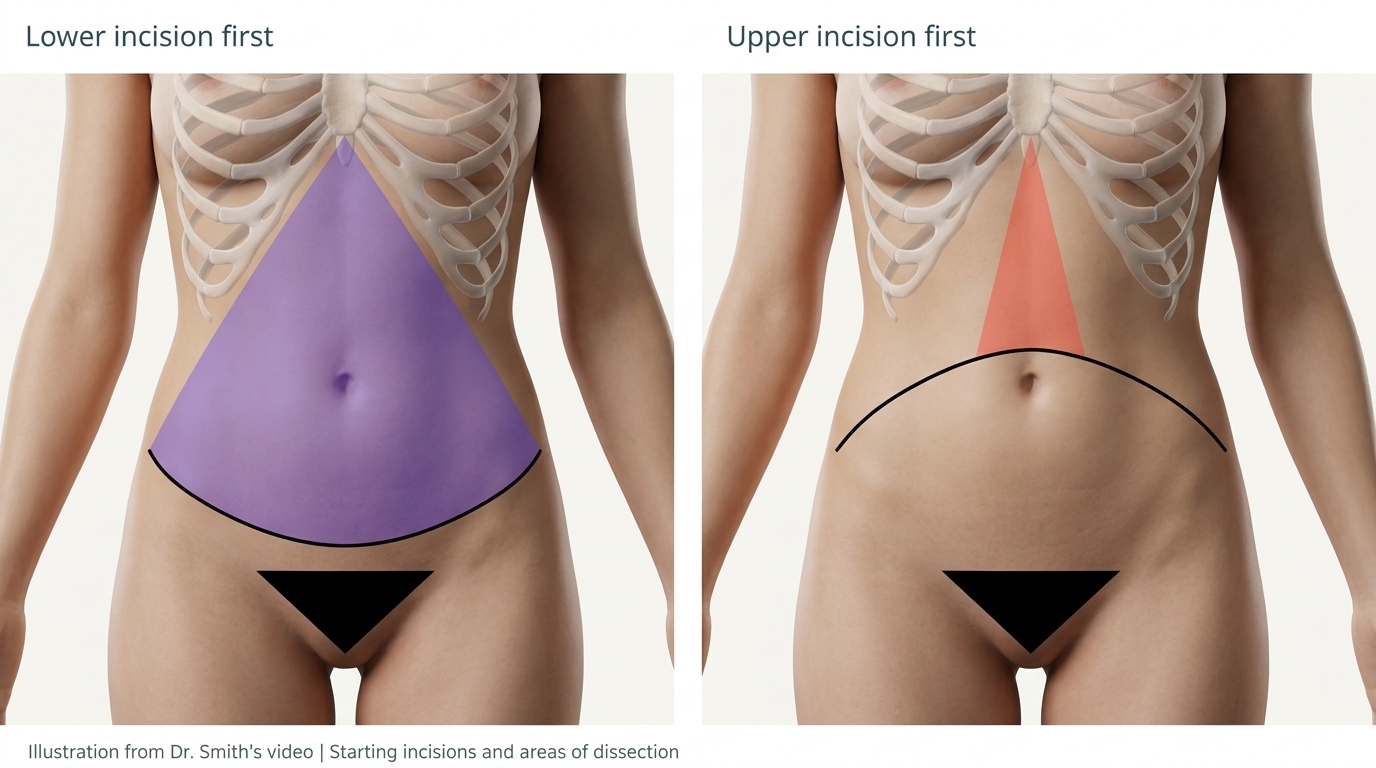
By comparison, starting above the planned skin excision allows Dr. Smith to reach the abdominal wall through a narrower area of dissection. “Dissection” means separating the skin-and-fat layer from the tissues underneath. This layer is often called a skin flap.
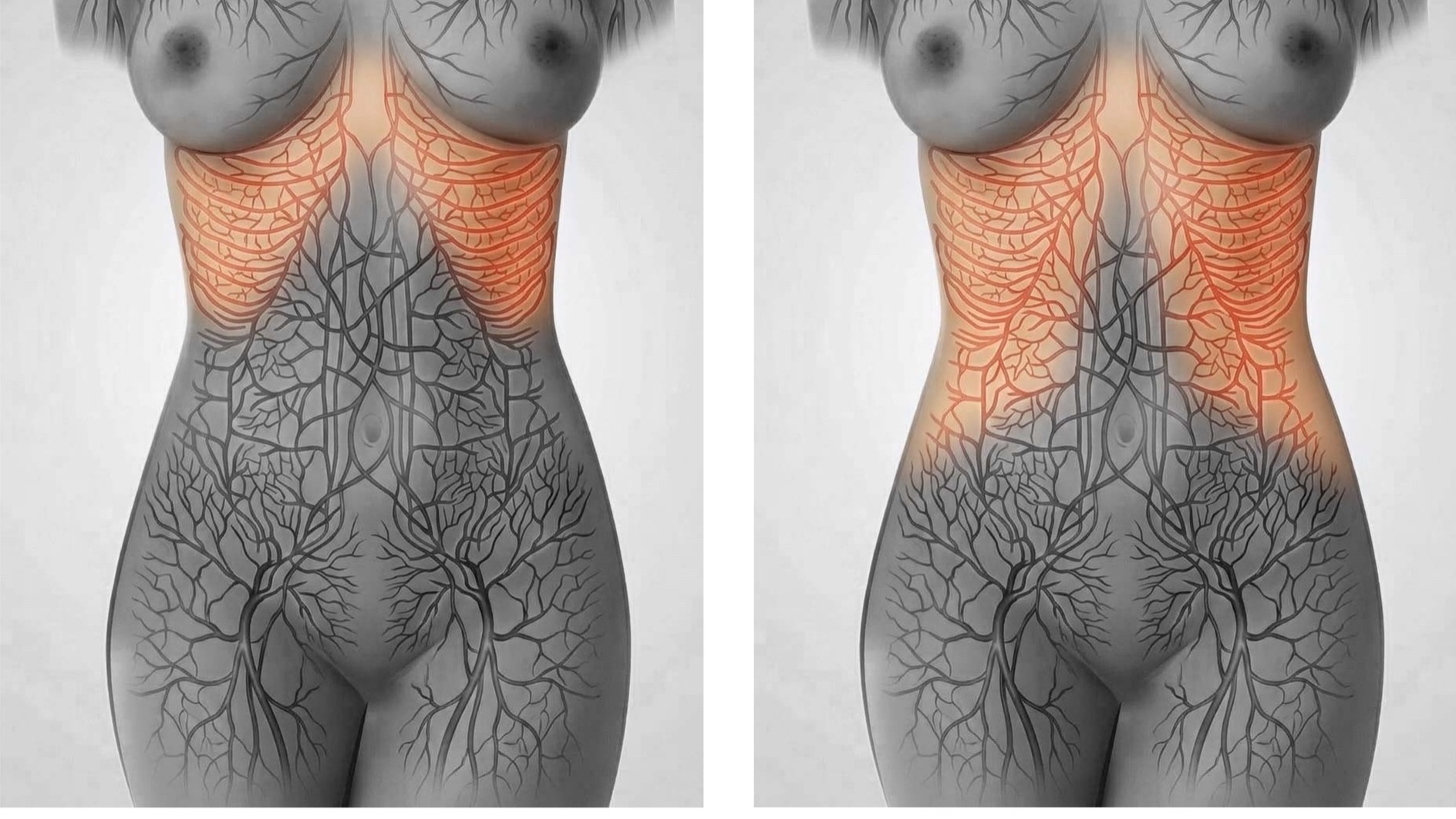
A narrower dissection can preserve more of the small blood vessels that pass from the deeper tissues into the flap. Those vessels, called perforators, help supply the skin with oxygen and nutrients.
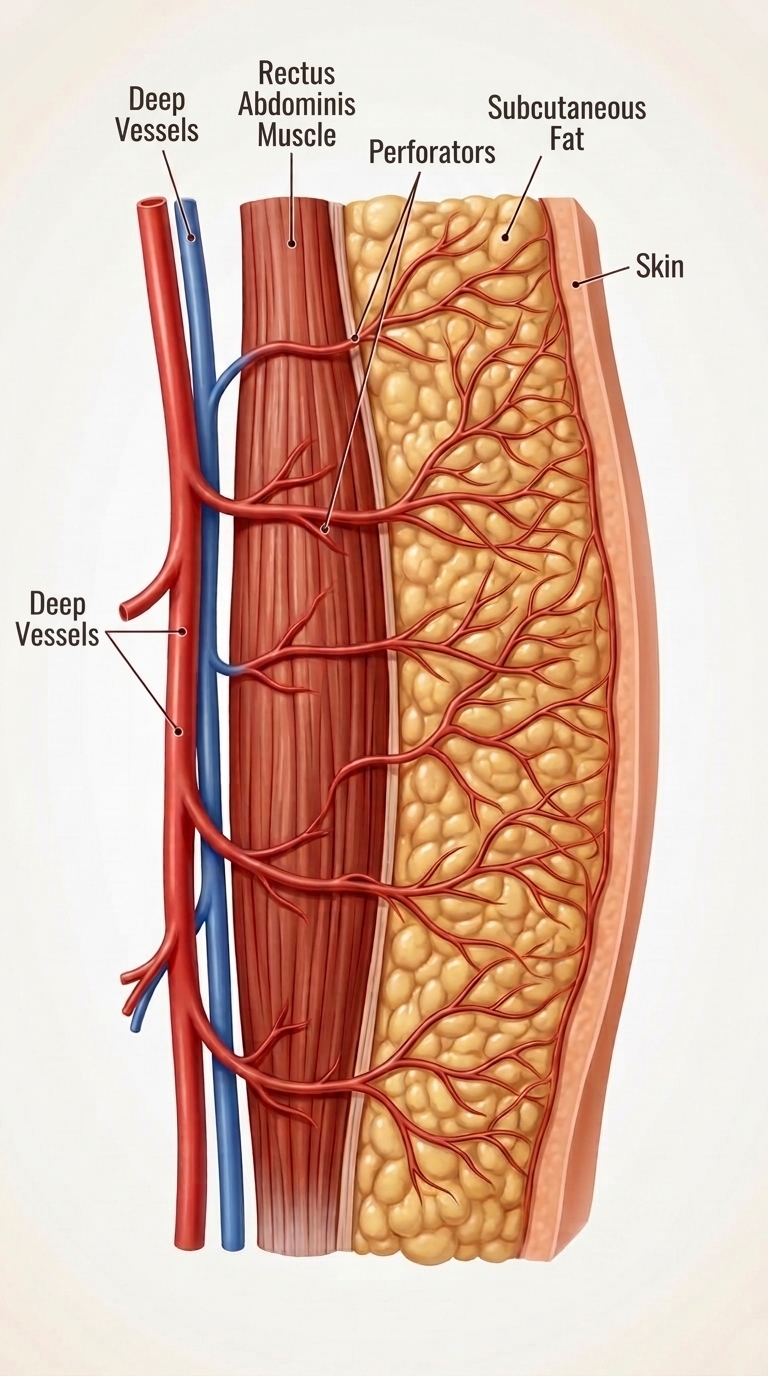
Dr. Smith’s aim is to preserve a well-nourished flap that can be moved into position while removing the original belly-button opening. Specifically, a flap with better blood supply can withstand more tension (always at the deeper layers, never at the skin), thereby allowing enough skin excision to remove the entire original belly button opening. This technique achieves significant skin removal without placing the skin itself under undue tension, which optimizes the quality of the resulting scar.

The principle of preserving perforators through limited dissection is also described in this peer-reviewed lipoabdominoplasty technique article.
Does an upper incision mean a higher final scar?
No. The first incision and the final scar position are different parts of the plan.
The upper incision marks the upper edge of the skin being removed. As the remaining skin moves downward, that edge becomes part of the lower closure. Careful planning determines where the final horizontal scar sits.
Dr. Smith’s goal is to position it low enough to be concealed by suitable underwear or swimwear. The appropriate position depends on your anatomy and the clothing you want it to sit beneath.
Can every vertical scar be avoided?
No technique guarantees that every patient can avoid one. The amount and distribution of excess skin, the position of the belly button, existing scars and the condition of the tissues all influence the plan. Dr. Smith is able to avoid a vertical scar in the vast majority of patients.
Sometimes a short vertical scar is the better tradeoff for a safe closure and an appropriate horizontal scar position. Avoiding that extra scar should not come at the expense of the skin’s blood supply or a closure under excessive tension.
Avoiding a vertical scar also does not make a tummy tuck scarless. A full tummy tuck typically leaves a low horizontal scar and a scar at the belly button (Dr. Smith places this scar inside the belly button to make it difficult to see). Their eventual visibility depends on placement and healing.
Is this the same as a fleur-de-lis tummy-tuck scar?
A short vertical closure of the old belly-button opening is different from the longer, deliberately planned vertical incision used in a fleur-de-lis tummy tuck.
A fleur-de-lis procedure can address substantial excess skin in more than one direction, including side-to-side looseness that a horizontal incision alone may not adequately address. It may be considered for selected patients after major weight loss. The appropriate operation depends on the pattern of excess skin and the patient’s priorities.
What should you ask at your consultation?
If avoiding a vertical scar is important to you, discuss it before surgery. Useful questions include:
- Is my original belly-button opening likely to be removed with the excess skin?
- Where do you expect my horizontal scar to sit?
- What circumstances might make a short vertical scar necessary?
- Can I see healed results in patients with anatomy similar to mine?
Dr. Smith’s video explanation shows the difference between starting above the belly button and starting with the standard lower incision, including what happens to the original opening.
For more about the procedure, visit our tummy tuck in New York City page. During your consultation, Dr. Smith can assess your skin and discuss the scar placement that makes sense for your anatomy and goals.