
Restylane in NYC
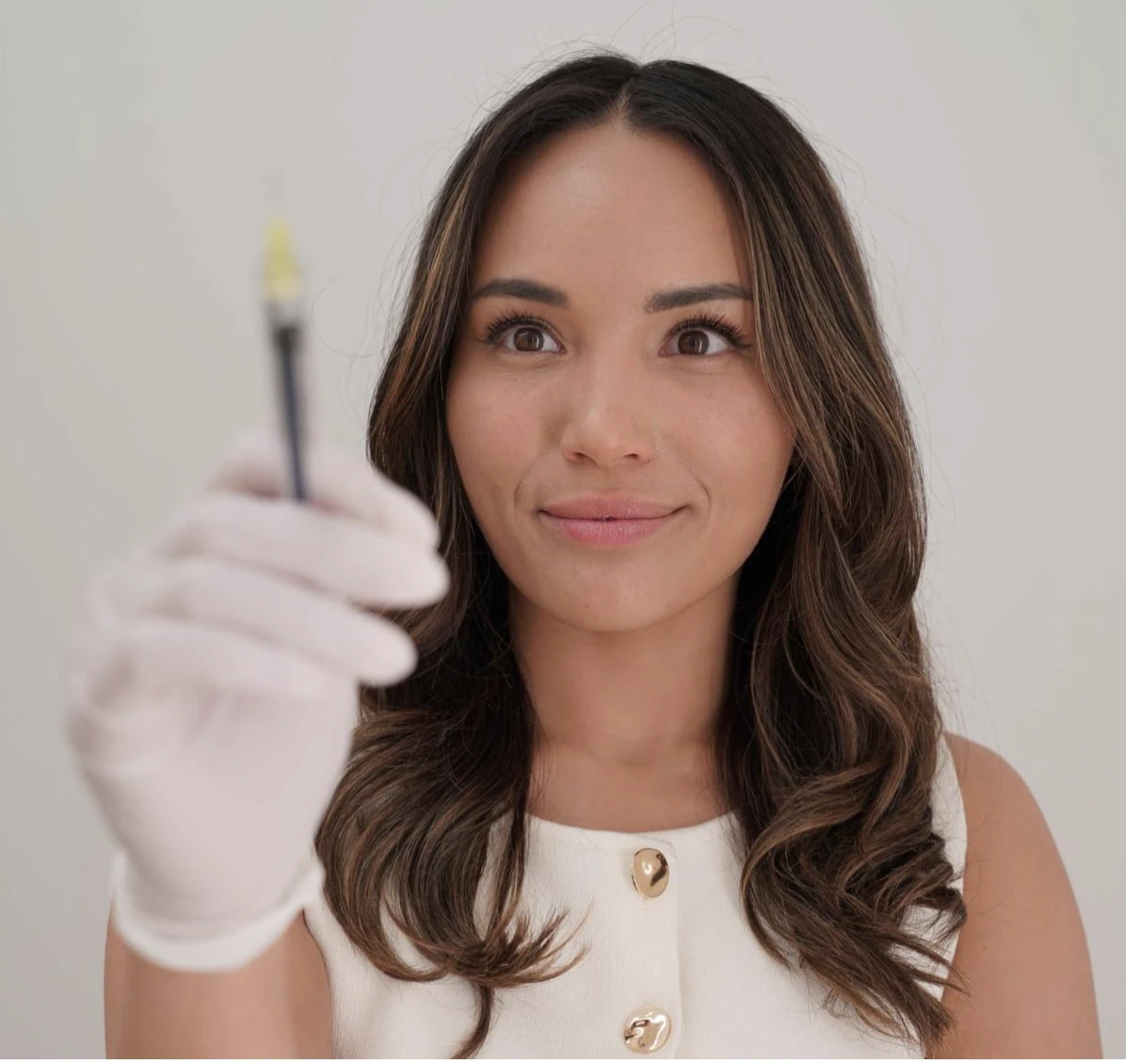
Restylane is a family of hyaluronic acid dermal fillers made by Galderma. It was the first hyaluronic acid filler approved by the FDA in the United States, in 2003, and the range now covers products built two different ways for two different kinds of job. Dr. Darren M. Smith selects the product after examining you and injects it himself at his Manhattan office.
What Restylane is
Restylane is a hyaluronic acid filler. Hyaluronic acid is a sugar molecule the body already produces, found in skin and connective tissue, where it binds water and gives tissue volume. In a filler it is cross-linked into a gel so it holds its shape for months rather than being broken down within days.
The hyaluronic acid used in Restylane is produced by bacterial fermentation rather than taken from an animal source, which is why allergy testing beforehand is not required as it was with the collagen fillers that preceded it.
Restylane fillers are temporary. The gel is broken down by the body over months, and treatment is repeated to maintain a result.
Two gel technologies, two kinds of behavior
The practical difference between products in the Restylane range comes from how the gel is made.
NASHA
NASHA stands for Non-Animal Stabilized Hyaluronic Acid, the original Restylane process. It produces a firmer gel that stays where it is put and resists being flattened. That is what you want when the job is to hold projection, such as building a cheek.
XpresHAn Technology
The later products in the range are made with a different process that produces a more flexible gel. It moves with the tissue rather than resisting it, which suits areas that are constantly in motion, such as the folds around the mouth.
Neither is better in the abstract. Matching the gel to the job is the point, and it is a more common cause of a good or a poor result than the volume used.
The products in the Restylane range
- Restylane and Restylane-L are the original formulations, used for the folds around the mouth and for the lips. The L means the product contains lidocaine.
- Restylane Lyft is a firmer gel used to add volume to the cheeks and to treat volume loss in the back of the hands.
- Restylane Contour is formulated for cheek definition, with a gel designed to move with facial expression.
- Restylane Silk is a fine gel formulated for lip shaping and the vertical lines around the mouth.
- Restylane Kysse is formulated for lip volume and texture, with flexibility for natural movement.
- Restylane Refyne and Restylane Defyne are flexible gels for the folds running from the nose to the corners of the mouth and from the corners of the mouth downward; Defyne is the firmer of the two and is used for deeper folds.
- Restylane Eyelight is formulated for hollowing under the eye.
Which of these Dr. Smith uses depends on the area, your tissue and the change you want. A plan often combines more than one.
The consultation
Dr. Smith assesses volume, skin quality, laxity and proportion across the whole face before recommending anything, because treating the cause of a change usually produces a more natural result than treating the change.
- A review of your medical history, medicines and allergies, including lidocaine allergy and any autoimmune condition
- A record of any filler you have had before, what was used, where and when
- A plan naming the areas to be treated and the product for each
- A clear statement of what will change and what will not
The consultation fee is $500, and it is applied toward any procedure you go on to book.
What the treatment is like
Most appointments take between fifteen and forty-five minutes depending on how many areas are treated.
- The skin is cleaned and the plan is marked out
- A topical numbing cream is applied; several products also contain lidocaine
- The filler is placed with a fine needle or a blunt cannula, depending on the region
- The result is shaped and reviewed with you sitting upright
Dr. Smith uses a blunt cannula rather than a needle in some regions because it is less likely to enter a blood vessel, which is the complication that matters most in filler treatment.
Restylane recovery and how long results last
There is no real downtime, but plan for swelling and the possibility of bruising.
- Swelling is normal for two to three days and is most noticeable in the lips
- Bruises fade over a week to ten days and can be covered with makeup after the first day
- Avoid strenuous exercise, alcohol and heat for the first day
- Use acetaminophen rather than an NSAID for discomfort
- Leave two weeks before judging the final result
Duration depends on the product and the area. Firmer gels placed deep in the midface generally last longest; lip treatment, in an area that moves constantly, lasts the shortest time.
Safety and risks
Common side effects are local and short-lived: swelling, bruising, redness, tenderness, firmness and small lumps in the first days.
The serious risk is injection into or compression of a blood vessel, which can interrupt the blood supply to an area of skin. In rare cases involving vessels around the eye and nose this has caused vision loss or stroke. It is uncommon, and it is why anatomy, technique and the ability to recognize and treat the problem immediately matter more than the choice of brand.
Because Restylane is a hyaluronic acid filler, it can be dissolved with hyaluronidase, both as an emergency measure and as a way to reverse a result you are not happy with.
Lumps or nodules can appear later as well as immediately, sometimes after an illness, a vaccination or dental work. Tell Dr. Smith about any autoimmune condition, bleeding problem, medicine acting as a blood thinner, active infection or skin condition at the site, and if you are pregnant or breastfeeding. Filler is not given during pregnancy or breastfeeding.
What determines the cost of Restylane
Restylane is priced by the amount of product used, so the cost follows from how much your plan calls for.
- How many syringes are needed
- Which products are used, since they are priced differently
- How many areas are treated, and whether the plan is staged across visits
- Whether a neuromodulator or another treatment is combined at the same visit
You are given an exact figure at consultation before anything is booked. Dr. Smith is out of network with all insurance plans, and the practice helps patients use out-of-network benefits toward care; cosmetic treatment is not covered. Financing is available through CareCredit and Alphaeon Credit. The consultation fee is $500 and is applied toward any procedure.
Common questions about Restylane
How long does Restylane last?
It depends on the product and the area, generally from several months to well over a year. Firmer gels placed deep last longest, and lip treatment lasts the shortest time.
What is the difference between Restylane and Juvederm?
They are two families of hyaluronic acid filler from different manufacturers, made by different cross-linking methods, which gives their gels different handling. Both are used for similar purposes. The question that matters is which specific product fits the specific job, not which brand is better.
Do I need an allergy test first?
No. The hyaluronic acid is made by bacterial fermentation rather than taken from an animal source, so pre-treatment allergy testing is not required. Tell Dr. Smith about any lidocaine allergy, since several products contain it.
Can Restylane be dissolved?
Yes. Hyaluronidase breaks down hyaluronic acid fillers, so a result can be reversed or adjusted.
Does it hurt?
There is some discomfort. Topical numbing is used, several products contain lidocaine, and local anesthetic can be added for sensitive areas such as the lips.
When will I see the result?
Immediately, with swelling on top of it. The final shape is apparent at about two weeks.
What is NASHA?
It is the process used to make the original Restylane gels: Non-Animal Stabilized Hyaluronic Acid. It produces a firmer gel that holds its shape, which suits work that needs projection rather than flexibility.
How much bruising should I expect?
Some patients bruise and some do not. Bruises typically fade over a week to ten days. Avoiding alcohol and anything acting as a blood thinner beforehand reduces the chance, and any decision to hold a prescribed medicine is made with the physician who prescribed it.
Can it be combined with Botox?
Yes, and the two are commonly planned together because they treat different problems: filler replaces volume, and a neuromodulator relaxes the muscle producing a movement line.
What happens when it wears off?
The area gradually returns toward how it looked beforehand. Filler does not leave the tissue looser than it was.
Who performs the injections?
Dr. Smith performs them himself. He is board-certified by the American Board of Plastic Surgery and a Fellow of the American College of Surgeons, with fellowship training in craniofacial and aesthetic surgery.