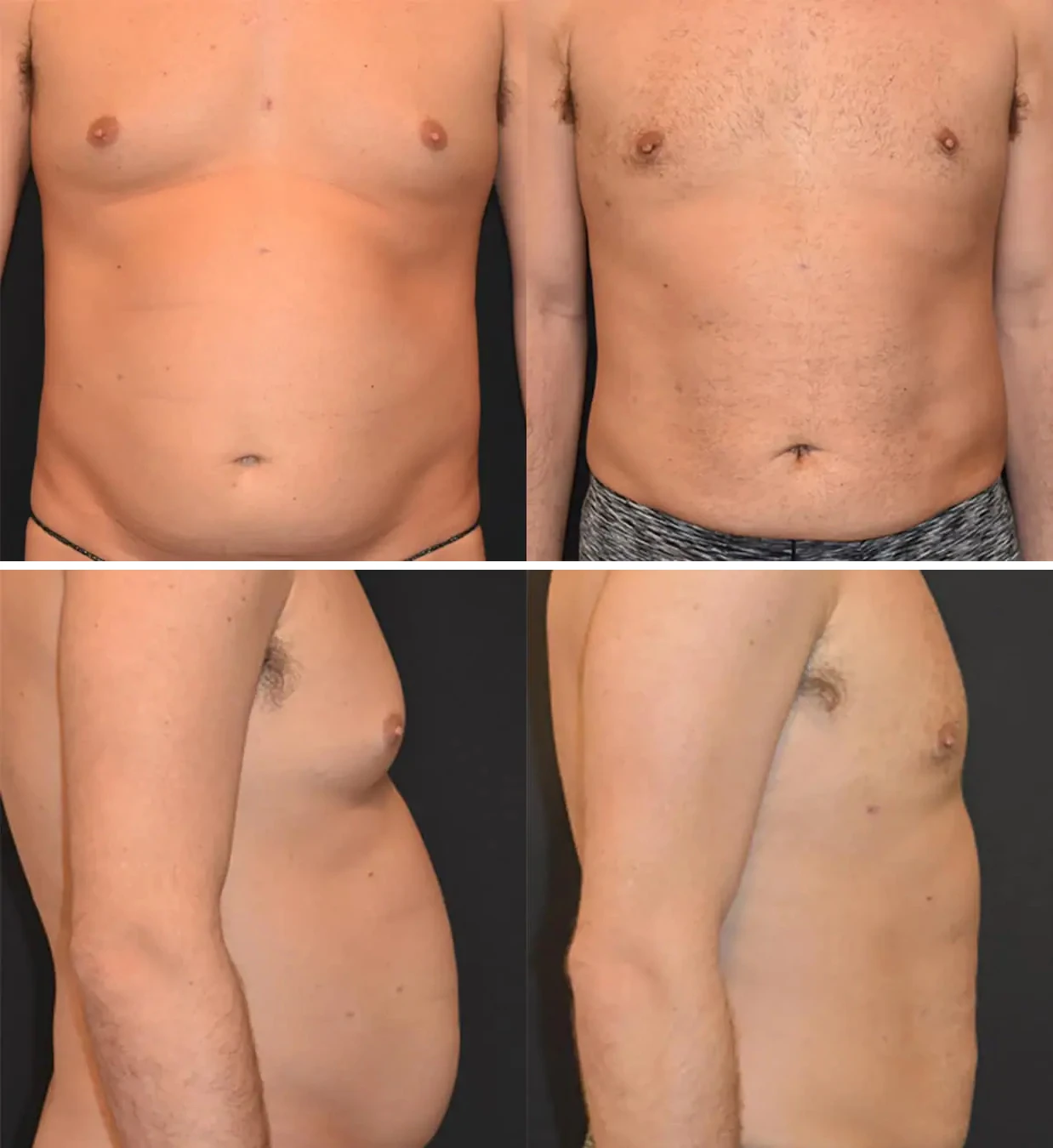
Male Liposuction
Case 1
Individual results may vary.


Liposuction, also called body contouring, became a widely requested cosmetic procedure for removing excess fat from various areas of the body. Recovery is shorter than for excisional body procedures, but expect swelling, bruising, and several weeks in a compression garment.
Dr. Smith has completed fellowship training in both aesthetic surgery and craniofacial surgery, and is one of New York's more experienced surgeons in male body contouring.
Male Liposuction
Case 1
Individual results may vary.
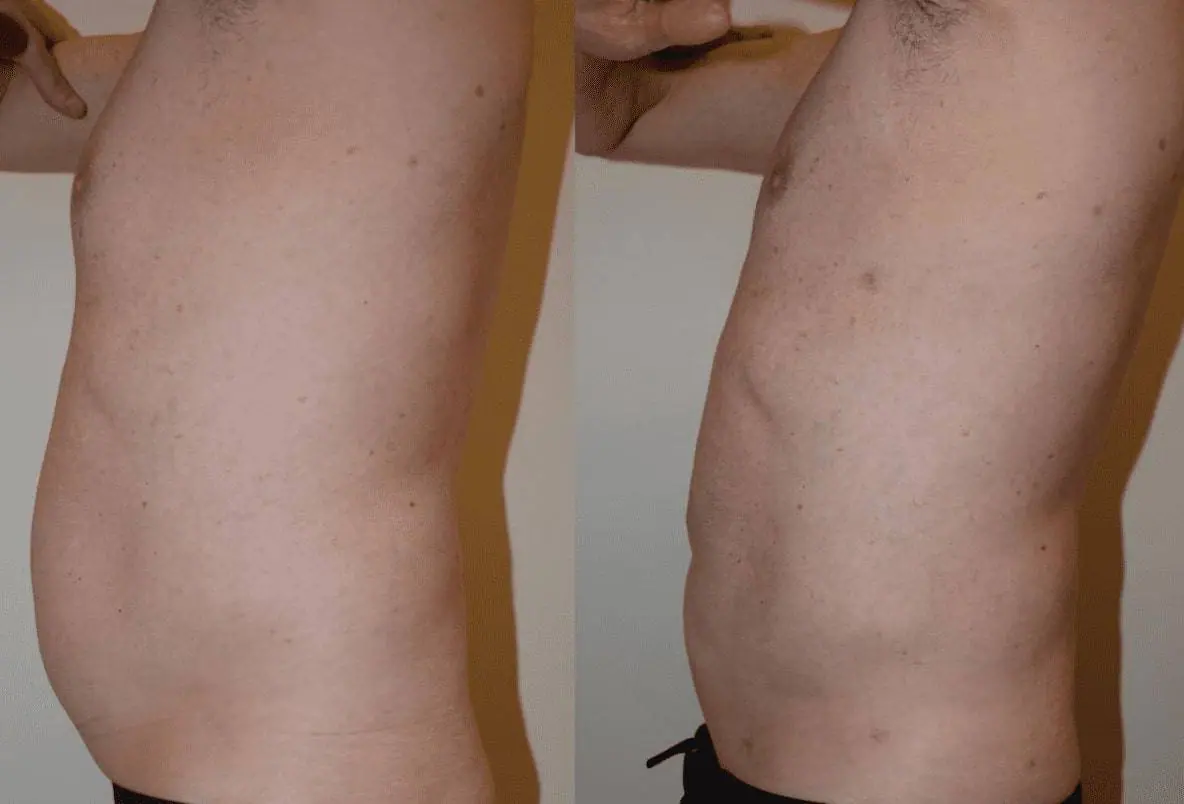
Male Liposuction
Case 2
Individual results may vary.
Individual results may vary.
For many men, toning up, losing weight, and achieving their ideal body requires a mixture of healthy meals and regular exercise. Yet, some men are still left with stubborn pockets of fat around the mid-torso and other areas. Male liposuction is liposuction that specifically targets the areas men tend to store excess fat: the old “muffin top,” “beer belly,” or whatever loving name you have for your mid-region.
Dr. Smith removes excess fat and sculpts the male body toward a fitter, more athletic shape. He treats the abdomen, thighs, chin, and enlarged male breasts (gynecomastia), working through small incisions rather than extensive ones.
More common problem areas that can be treated with liposuction surgery include:
Most men come in when the first thing they notice in the mirror is the thing that bothers them. For some, no amount of exercise and diet clears the fat from those areas. Liposuction addresses localized fat that has not responded to lifestyle change; it is not a weight loss procedure. Dr. Smith treats the abdomen, flanks, and other areas where men tend to store fat. For a plan covering the torso, explore Lipo 360.
Male body sculpting is performed under a general anesthetic, a local anesthetic with sedation, or straight local anesthesia. You will discuss which anesthetic option suits your case during your initial consultation. The procedure takes an average of 1-2 hours and involves making small incisions, less than 1 cm in size. Dr. Smith uses a suction device called a cannula to remove excess fat. In most cases he pairs the cannula with VASER, an ultrasound device that loosens fat before it is removed. VASER is part of his routine liposuction technique for two reasons: he finds it substantially reduces blood loss, and the deep tissue tightening it produces gives a contouring advantage. He especially likes to use it in men, whose connective tissue tends to be tougher and can impede liposuction, and he considers it non-negotiable in gynecomastia and in liposuction of the flanks, where the tissue is naturally fibrous. The incisions are then closed with a stitch or dissolvable suture. They are placed where clothing covers them where possible. Scars fade over months but do not disappear entirely, and how they heal varies between patients.
The best candidates for male liposuction are men of all ages who are in good general health, have good skin elasticity, and maintain realistic expectations. Dr. Smith evaluates every candidate on an individual basis during a private surgical consultation. Male liposuction in NY can help when lifestyle change has not produced the result you want. If localized fat makes you look disproportionate, Dr. Smith can reduce those areas with liposuction for a slimmer, more proportionate contour. How much change is possible depends on your anatomy and skin quality.
After Dr. Smith is finished with your procedure, you’ll head over to our recovery room to relax. Our expert nursing staff will be on hand to ensure you’re comfortable and well taken care of. Most of our male liposuction patients will go home the same day as the procedure. We typically keep you here for an hour or two for monitoring, and when everything’s cleared, you’ll be able to walk out the door.
Keep in mind there will always be a short period of swelling and potential bruising after your procedure. This is completely normal; bruising tends to clear by 10 to 14 days and most visible swelling is gone in a few weeks. Before your liposuction procedure, Dr. Smith gives you a list of care instructions. Follow them carefully, because they affect how well you heal. We begin mild pain medication and an anti-nausea medication immediately following surgery.
You will wear a specially contoured compression garment for 4 weeks after liposuction. The garment supports the tissues while swelling settles and helps the skin redrape over the new contour. We will guide you to the right garment for your size and for the procedure you had done.
During your pre-op appointment with Dr. Smith, he will explain when you can return to your normal lifestyle and exercise routine. Most patients are back at a desk job in 48 hours and back to a light workout in about 5 days. Full recovery averages two weeks. It can take a few months to see the final result as swelling subsides and the tissues contract.
The cost of male liposuction depends on a number of factors but is mostly determined by the number of areas being treated, the size of those areas, whether additional treatments (like skin tightening with BodyTite) are necessary, and the kind of anesthesia required.
Fees are quoted individually after your consultation. The quote itemizes the surgeon’s fee, anesthesia, and facility charges, and it accounts for any energy-based devices added to the plan.
Treatments that might be conducted in combination with male liposuction are generally some form of skin tightening procedure or a treatment to build muscle mass. For skin tightening the practice uses BodyTite, which delivers bipolar radiofrequency energy to heat and tighten skin. To build muscle definition, liposuction is often paired with a post-operative course of Emsculpt Neo, given as four to six sessions. The manufacturer reports an average increase in muscle mass of 25 percent in the treated area. How much any individual gains varies.
Regarding options for anesthesia with male liposuction, there are essentially three kinds of anesthesia available. First, there is general anesthesia, in which you are completely asleep, and a machine helps you breathe. Next is twilight anesthesia (also called intravenous sedation), in which you are awake and breathing on your own but made to feel relaxed with intravenous medication. Finally, there is local anesthesia. In local anesthesia, the surgical site is made to feel numb, but you are awake. The first two kinds of anesthesia (general and twilight) require a board-certified anesthesiologist and are therefore more costly. Dr. Smith recommends general or twilight anesthesia for larger, multiple-area cases. Smaller liposuction procedures involving one or two areas may often reasonably be performed with local anesthesia alone.
Smaller cases, such as liposuction of the waist alone under local anesthesia, are quoted lowest. The most common plan, liposuction of the abdomen and waist under twilight or general anesthesia, is quoted higher because it requires an anesthesiologist and more operating time. Adding Emsculpt Neo or BodyTite to the procedure increases the fee accordingly. Financing is available through CareCredit and Alphaeon Credit, and the $500 consultation fee is applied toward any procedure you book.
Dr. Smith’s practice is located at the Ritz Tower, 111 East 57th Street, Ground Floor, New York, NY 10022, in Midtown Manhattan. The office welcomes patients from across the five boroughs, the tri-state area, and well beyond.
Choosing where you have surgery matters as much as choosing who performs it. New Yorkers come to Dr. Smith because his work reflects the city itself: refined, exacting, and never one-size-fits-all. Whether you’re a lifelong New Yorker or traveling in for a consultation, you’ll find a practice that treats every patient with precision and discretion that have made Manhattan a destination for plastic surgery patients from around the world.
YOUR NEXT CHAPTER
Discuss your priorities, ask questions and explore treatment options with our team.
Our practice is located at the Ritz Tower, 111 East 57th Street in Midtown Manhattan. We welcome patients from the five boroughs and the surrounding tri-state area. If you are traveling for care, explore our guide for out-of-town patients.
Request a consultation