










CO2 Laser Resurfacing NYC


“Being a Nurse I look at medical and surgical procedures slightly differently. So I guess you can say I’m more critical than most. But I only have the upmost positive take away from my experience with Dr Darren Smith and all of his staff. Everything from beginning (consultation) to end (post op care) was exceptional. He listened to my concerns and guided me to a natural enhanced outcome …
Dr Smith takes a personal approach and really listens with guidance toward the best fit for your concerns. I can’t be happier and will definitely be back.”
— S G
What CO2 Laser Resurfacing Is
- Traditional fully ablative CO2 — the entire skin surface is treated. Outcomes are dramatic; downtime is typically 10–14 days, with redness lasting weeks to months and a significant pigmentation risk.
- Fractional ablative CO2 — laser energy is delivered in microscopic columns (treatment zones) separated by intact skin, which heals the surface within days. This is the category the Tetra Pro occupies.
- Superficial fractional CO2 (CoolPeel) — a proprietary modality on the Tetra Pro that uses ultra-short, high-peak-power pulses to ablate only the epidermis without bulk thermal injury, producing a true CO2 result with one to three days of social downtime.
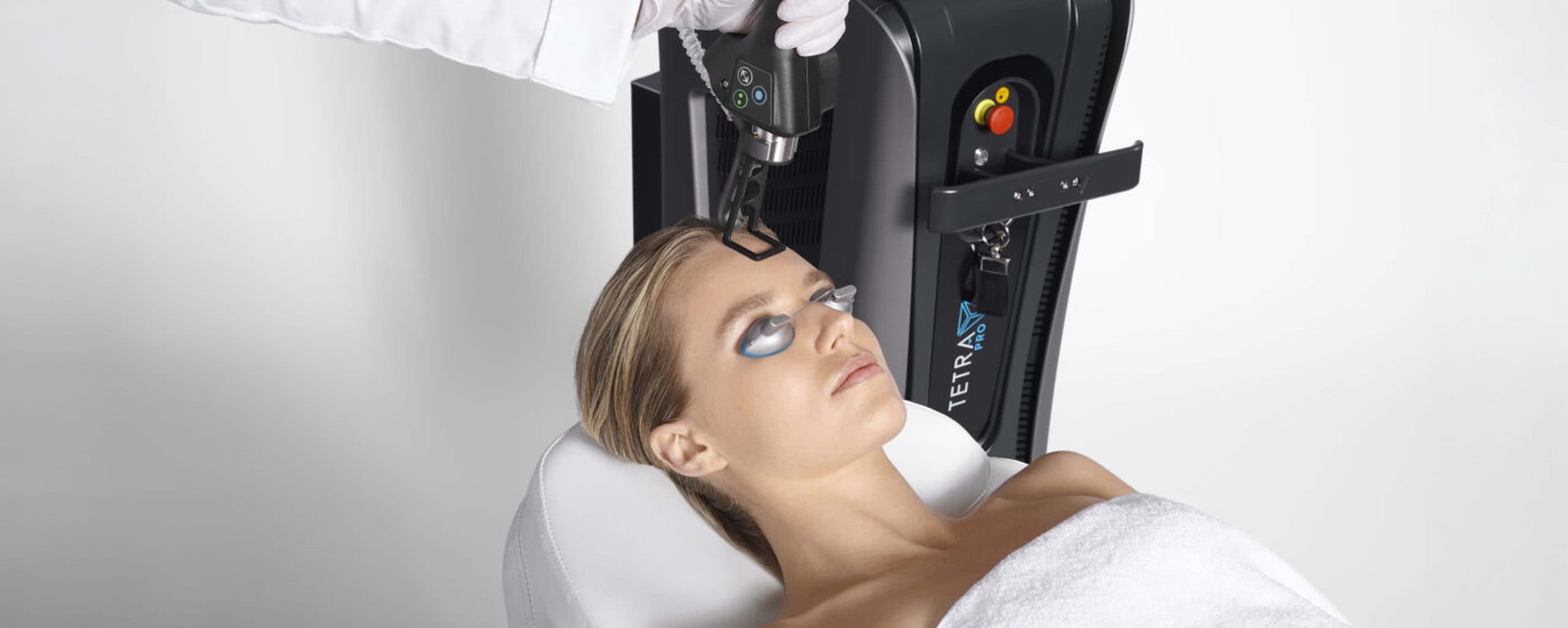
The Tetra Pro Platform: A Surgeon-Grade CO2 System
- 40-watt RF-excited metal-tube CO2 source at 10,600 nm — the highest power output in the DEKA aesthetic line, with a larger 20×20 mm scanning field that reduces full-face treatment time by approximately 30 percent versus prior generations.
- Pulse Shape Design (PSD™) — DEKA’s proprietary technology that allows independent control of pulse energy, pulse duration, and pulse shape. This is the engineering foundation that makes CoolPeel possible.
- Four pulse modes on a single platform:
- H-Pulse (HP) — high peak power, ultra-short pulse duration, used for CoolPeel.
- DEKA Pulse (DP) — power and pulse act independently for deeper, more customizable resurfacing.
- Smart Pulse (SP) — traditional fractional ablative pulse for moderate-depth resurfacing.
- Continuous Wave (CW) — surgical/freehand mode for lesion removal and scar revision.
- HiScan DOT scanner with selectable scan shape, size, density, and pattern (square, rectangular, circular, with adjustable spacing). DOT — Dermal Optical Thermolysis — is DEKA’s fractional pattern technology.
- Moveo in-motion delivery — a glide-on technique enabled by SmartTrack temperature management, which feathers boundaries and shortens treatment time on the neck, décolleté, and back.
- Three pre-loaded scanning systems — DOT PRO (resurfacing), Scar 3 PRO (deep scar remodeling, up to ~6 mm depth at lower energies), and Derma Scan.
CoolPeel Explained: The H-Pulse Difference
Why a Plastic Surgeon Should Direct Your CO2 Laser Treatment
- Board-certified by the American Board of Plastic Surgery and a Fellow of the American College of Surgeons (FACS) — the recognized standards of training and ethical practice for plastic surgeons in the United States.
- Dual fellowship-trained: craniofacial surgery at the Hospital for Sick Children in Toronto, and aesthetic surgery at Manhattan Eye, Ear and Throat Hospital (MEETH) — historically one of the most selective aesthetic plastic surgery fellowships in the country.
- Author of more than 200 peer-reviewed publications in plastic and reconstructive surgery, with a research portfolio that includes craniofacial, aesthetic, and reconstructive topics.
- President of the New York Regional Society of Plastic Surgeons (NYRSPS) — the regional component of the American Society of Plastic Surgeons.
- A solo practitioner whose Manhattan office at the Ritz Tower, 111 East 57th Street is a cash-pay practice focused on body contouring, mommy makeover, breast surgery, lipedema surgery, and facial procedures.
What the Tetra Pro Treats
- Fine lines and rhytids — periocular, perioral, cheek
- Photoaging and sun damage — dyschromia, solar lentigines, mottled pigment
- Skin texture and tone — dullness, roughness, uneven surface
- Enlarged pores
- Atrophic acne scars — rolling, boxcar, and selected ice-pick (ice-pick scars respond best to combined approaches)
- Surgical and traumatic scars — including scar revision after prior procedures
- Actinic keratoses — full-field treatment of field cancerization
- Benign cutaneous lesions — seborrheic keratoses, dermatosis papulosa nigra, sebaceous hyperplasia, syringomas, skin tags (freehand CW mode)
- Periocular and perioral skin — areas where surgery alone cannot address etched lines
- Neck, décolleté, and dorsal hands — non-facial photoaging (Moveo in-motion mode)
Candidacy
- Strong candidates include adults with photoaging, fine to moderate rhytids, dyschromia, enlarged pores, mild to moderate atrophic acne or post-traumatic scars, and otherwise healthy skin.
- Fitzpatrick I–IV are typical candidates across all Tetra Pro modes. Fitzpatrick V–VI can often be treated safely with CoolPeel and conservative DOT fractional settings, but candidacy is individualized; patients with darker skin types carry a higher baseline risk of post-inflammatory hyperpigmentation with any ablative laser.
- Relative contraindications include active acne in the treatment field, active herpes simplex outbreak (antiviral prophylaxis is standard), recent isotretinoin (typically a 6–12 month interval per current consensus), keloidal tendency, recent radiation to the area, and immunosuppression.
- Realistic expectations are essential. CO2 resurfacing improves skin quality. It does not replace surgery for skin laxity, fat loss, or volume change; for those issues, a facelift, blepharoplasty, or other surgical procedure is the appropriate intervention.
The Procedure: Patient Journey
- Consultation. Dr. Smith reviews medical history, medications, prior aesthetic treatments, Fitzpatrick type, and goals. The face is examined under standardized lighting. A treatment plan — single mode or combination — is built.
- Pre-treatment. Patients are instructed on retinoid washout (typically 5–7 days), sun protection, and antiviral prophylaxis if indicated. Photographs are taken.
- Day of treatment. Topical anesthetic is applied for 20–30 minutes when used. Eye protection is placed. The skin is cleansed and degreased. Treatment parameters are confirmed and a test pulse is delivered. The Tetra Pro is then operated across the face in zones, with Sub-Z cooling and, when appropriate, Moveo in-motion delivery on the neck and décolleté.
- Immediate post-treatment. A cooling mask or post-laser balm is applied. Patients leave with written aftercare instructions and a 24/7 contact protocol.
- Follow-up. Visits are scheduled to monitor healing and confirm endpoints, with subsequent sessions in a series spaced four to six weeks apart.
Recovery Timeline by Mode
- CoolPeel: Erythema and warmth resembling a sunburn for 24–72 hours. A fine sandpaper texture sheds over days 2–5. Mineral makeup is generally permitted at 24 hours per provider direction. Most patients return to public activity the next day.
- DOT fractional / DEKA Pulse: Erythema and pinpoint micro-crusting for 3–7 days, with dryness and flaking. Makeup at 5–7 days.
- Deep ablative: 5–10 days of redness, swelling, and serous crusting, followed by weeks of pinkness that resolves with strict sun protection.
- Freehand surgical: Site-dependent. A focal scar revision or lesion ablation typically heals in 7–14 days.
Cost in NYC
Safety, Fitzpatrick Considerations, and Realistic Risk
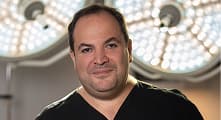
Author Bio
Real Patient Testimonials
My experience with Dr. Darren Smith and his staff made it obvious that I should never consider another plastic surgeon! I had several consultations with other cosmetic surgeons for a breast lift procedure before making the indisputable choice to go with Dr. Darren Smith.
— S K
CO2 Laser Resurfacing: Frequently Asked Questions
What is CO2 laser resurfacing?
CO2 laser resurfacing is a procedure that uses a 10,600 nm carbon dioxide laser to vaporize precise depths of skin and trigger collagen remodeling. It treats fine lines, photoaging, dyschromia, enlarged pores, and atrophic scars. On the Tetra Pro platform, it can be delivered as a no-downtime CoolPeel, a moderate fractional treatment, a deep ablative resurfacing, or a freehand surgical mode.
What is CoolPeel and how does it differ from traditional CO2?
CoolPeel is a proprietary modality from Cartessa Aesthetics that runs exclusively on the Tetra Pro CO2 laser. It uses an ultra-short, high-peak-power pulse (the H-Pulse) to ablate the superficial epidermis without bulk thermal damage. Traditional fully ablative CO2 produces dramatic results but requires 10–14 days of recovery; CoolPeel delivers a true CO2 resurfacing with one to three days of social downtime.
Is CoolPeel actually a CO2 laser?
Yes. CoolPeel is delivered on a 10,600 nm CO2 laser — the Tetra Pro. It is not a non-ablative laser and not a chemical peel. The "Cool" in CoolPeel refers to the absence of bulk thermal damage, not to the wavelength.
How does CoolPeel compare to Fraxel?
Fraxel devices (Fraxel Dual) are non-ablative lasers at 1550 nm and 1927 nm; they coagulate dermal tissue without removing the skin surface. CoolPeel is fractional ablative CO2 — it removes a precise depth of epidermis. Fraxel typically requires 3–5 sessions; CoolPeel typically requires 3–4. Many patients describe CoolPeel results as more textural and CO2-like, while Fraxel is often selected for pigment and melasma.
How does CoolPeel compare to Halo?
Halo is a hybrid fractional laser combining a 1470 nm non-ablative wavelength with a 2940 nm erbium ablative wavelength. It is a different device with different physics. Halo is often selected for tone and pigment with controlled downtime; CoolPeel is selected for true CO2 resurfacing with the shortest downtime in its category.
How long is recovery from CO2 laser resurfacing?
It depends on the mode. CoolPeel is typically 1–3 days of redness and a sandpaper texture. A DOT fractional treatment is typically 3–7 days. Deep ablative resurfacing is typically 5–10 days of more pronounced redness and crusting, followed by weeks of pinkness.
Does CO2 laser hurt?
CoolPeel is generally well tolerated, often with topical anesthetic only or no anesthetic at all; patients describe a warm prickling sensation. Deeper Tetra Pro treatments require more numbing and sometimes oral analgesia. Fully ablative treatments are typically performed with IV sedation or general anesthesia.
Is CoolPeel safe for darker skin?
The Tetra Pro can be used on a broader Fitzpatrick range than older CO2 devices because of pulse-shape control. CoolPeel is generally considered appropriate for Fitzpatrick I–IV, and can be used cautiously in V–VI under conservative parameters. All ablative lasers carry a higher pigmentary risk in deeper skin types, which is why candidacy is determined by the surgeon at consultation rather than by a brand claim.
How many CoolPeel treatments do I need?
A series of three to four sessions, spaced four to six weeks apart, is the standard course. Maintenance treatments are typically performed annually. Many patients see improvement after a single session; the series is for cumulative benefit.
How much does CO2 laser resurfacing cost in NYC?
Pricing in Manhattan reflects the platform, the operator, and the treatment plan. Dr. Smith’s practice is cash-pay; specific pricing for CoolPeel, fractional CO2, deep ablative resurfacing, or combination plans is reviewed at consultation when the protocol is finalized.
What is the difference between the Tetra Pro and the older Tetra or SmartXide DOT?
The Tetra Pro is DEKA’s 2024 generation. It increases peak power to 40 W, expands the scanning field to 20 × 20 mm (approximately 30 percent faster treatment), and adds Moveo in-motion delivery, SmartTrack heat management, and an updated user interface. The H-Pulse (CoolPeel) and DOT scanning are present across the SmartXide Tetra and Tetra Pro generations; the Pro generation refines power, speed, and patient-comfort features.
Can the Tetra Pro be used for acne scars?
Yes. Atrophic acne scars are one of the most studied indications for fractional CO2. The Tetra Pro can be set to a deeper fractional or DEKA Pulse mode for acne scarring; published clinical data on fractional CO2 for atrophic acne scars consistently report meaningful improvement over a series, often with combination protocols (subcision, microneedling, or platelet-rich plasma) for ice-pick morphology.
Can CO2 laser remove moles, age spots, or skin tags?
The freehand continuous-wave mode of the Tetra Pro is used for precise ablation of benign lesions such as seborrheic keratoses, dermatosis papulosa nigra, syringomas, sebaceous hyperplasia, and skin tags. Suspicious pigmented lesions are not lasered — they are biopsied first. Lesion evaluation and clearance are part of the consultation.
Can I combine CO2 laser with other treatments?
Yes. CoolPeel and fractional CO2 are commonly combined with neuromodulators, dermal fillers, RF microneedling, and surgical procedures, sequenced to respect healing. Dr. Smith builds a combination plan when appropriate at consultation.
Why see a board-certified plastic surgeon for CO2 laser resurfacing rather than a medspa?
The Tetra Pro is a Class IV surgical laser with modes that include a freehand surgical setting. The risks of CO2 — pigmentary change, scarring, infection, and complications around delicate periocular and perioral anatomy — are real. A board-certified plastic surgeon brings surgical anatomic knowledge, scar physiology, and complication management to every protocol. Dr. Smith oversees treatments at his Manhattan practice in that capacity.
CO2 Laser Resurfacing NYC in the Heart of New York City
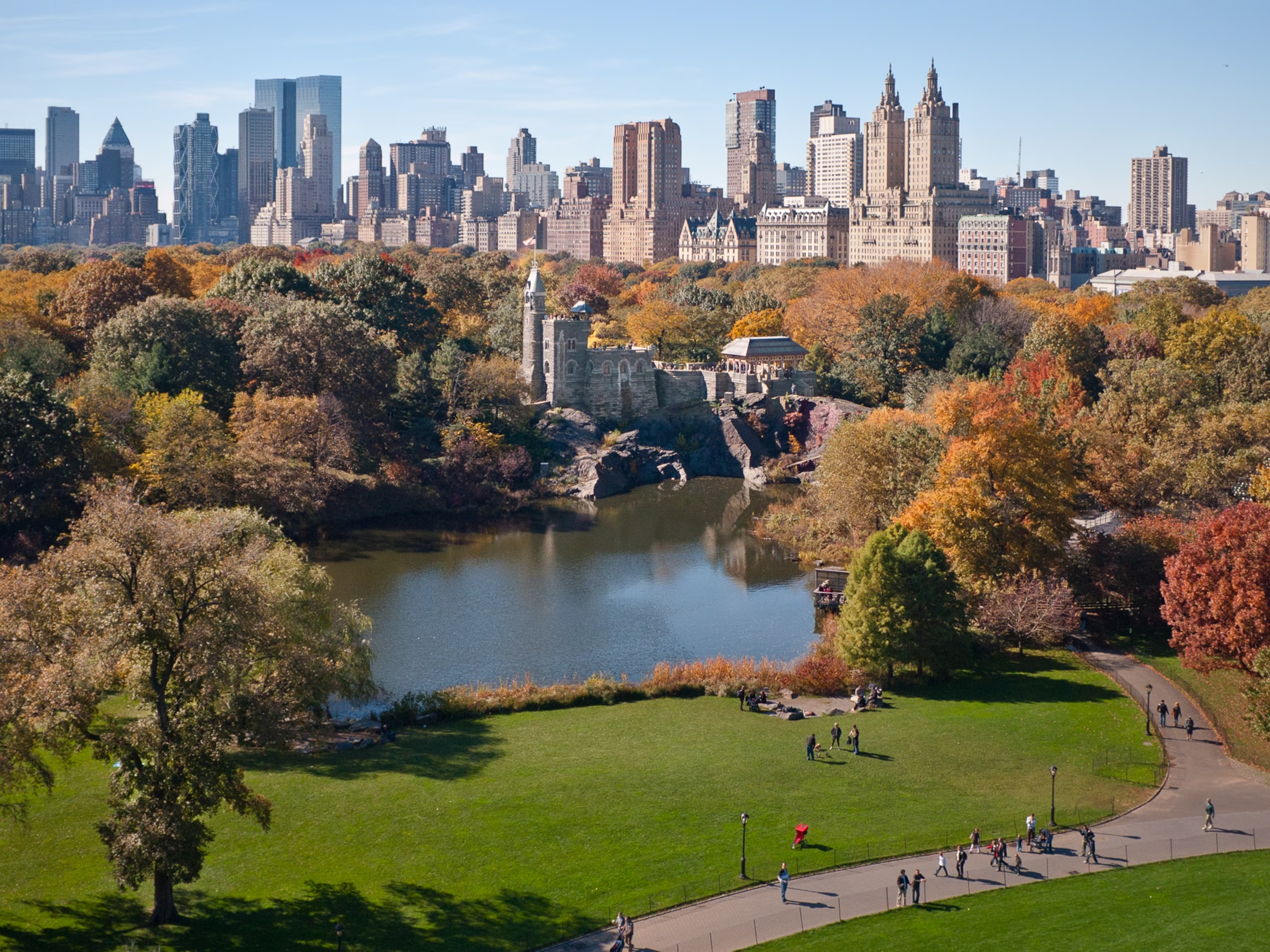
Dr. Smith’s practice sits in Manhattan’s Upper East Side, steps from Central Park and at the center of New York City’s most established medical corridor. The office welcomes patients from across the five boroughs, the tri-state area, and well beyond.
Choosing where you have surgery matters as much as choosing who performs it. New Yorkers come to Dr. Smith because his work reflects the city itself: refined, exacting, and never one-size-fits-all. Whether you’re a lifelong New Yorker or traveling in for a consultation, you’ll find a practice that treats every patient with precision and discretion that have made Manhattan a destination for plastic surgery patients from around the world.
Schedule a CO2 Laser Resurfacing NYC Consultation with Dr. Darren Smith
Call Today (212) 633-0627
“Within the first couple of minutes of meeting him, I knew he was the doctor for me.”

N F
New York, NY